 how-to
Emergency Vehicle Recovery Buffalo MO: 24/7 Help
Table of Contents
- When Your Vehicle Needs Emergency Recovery
- What to Do While Waiting for a Tow Truck
- Information to Give a Towing Company
- Car Stuck in Ditch Recovery: What to Expect
- Why Communication Matters During Vehicle Recovery
- 24-Hour Towing Buffalo MO: Why Availability Matters
- Specialized Recovery Services for RVs and Trailers
- Membership vs. Pay-Per-Call: What Makes Sense
- Frequently Asked Questions
Last Updated: October 7, 2026
When Your Vehicle Needs Emergency Recovery
Your vehicle breaks down on a remote road outside Buffalo. The weather's turning, traffic's picking up, and you need help fast. Emergency vehicle recovery isn't just about getting towed, it's about having a plan that keeps you safe while you wait and connects you with professionals who know how to handle your specific situation.
At Backwoods Towing, we've handled many recovery calls. The difference between a smooth recovery and a stressful one often comes down to knowing what to expect and communicating clearly with your towing company from the first call.
Emergency vehicle recovery covers everything from simple tows to complex winch-outs when your car's stuck off-road. The process depends on where your vehicle is, what condition it's in, and what equipment the recovery team needs to bring. Understanding the basics helps you stay calm and make better decisions when you're stranded.
What to Do While Waiting for a Tow Truck
The first minutes after a breakdown set the tone for the entire recovery. Your immediate actions protect both you and your vehicle.
Move to safety first. If you're on a highway or busy road, get out of traffic immediately. Turn on your hazard lights before you even call for help. If it's safe to exit your vehicle, stand well away from the roadway, at least 100 feet back if possible.
Turn off your engine and secure loose items inside your vehicle. Shift into park (or neutral if you're on an automatic), engage the parking brake, and turn off the ignition. If you have road flares or a reflective triangle, place them behind your vehicle to warn other drivers.
Stay in your vehicle if you're on an isolated road at night. Lock the doors and keep your phone accessible. Call Backwoods Towing or another local recovery service immediately with your location. Give them clear landmarks, mile markers, nearby businesses, or cross streets, rather than just an address.
Keep your phone charged and ready. When the tow truck arrives, you'll want to stay in communication about timing and any special instructions for your vehicle. Many drivers worry about being left stranded for hours. Clear communication from your recovery service matters more than you'd think.
Information to Give a Towing Company
When you call for emergency vehicle recovery, the dispatcher needs specific details to send the right equipment and crew. Having this information ready speeds up your response time.
Start with your exact location. Use GPS coordinates, mile markers, or nearby landmarks. "I'm on Highway 65 about 3 miles south of Buffalo" is far more useful than "somewhere near town." If you can see a business name or road sign, mention it.
Describe your vehicle clearly: year, make, model, and color. Tell them whether it's a sedan, truck, SUV, or specialty vehicle. This helps the crew plan which tow truck and equipment they'll need. If your vehicle has all-wheel drive or special features, mention that too.
Explain what happened. Is your engine running? Did you hit something? Is your vehicle on the road, in a ditch, or stuck in mud? Are there other vehicles involved? The more detail you give, the better prepared the recovery team will be when they arrive.
Ask about wait time and keep your phone on. Most reputable services will give you a realistic estimate. Backwoods Towing prioritizes clear updates so you're not left guessing.
Car Stuck in Ditch Recovery: What to Expect
A vehicle stuck in a ditch is one of the most common recovery calls in rural Missouri. The process looks straightforward but involves specific techniques to avoid causing additional damage.
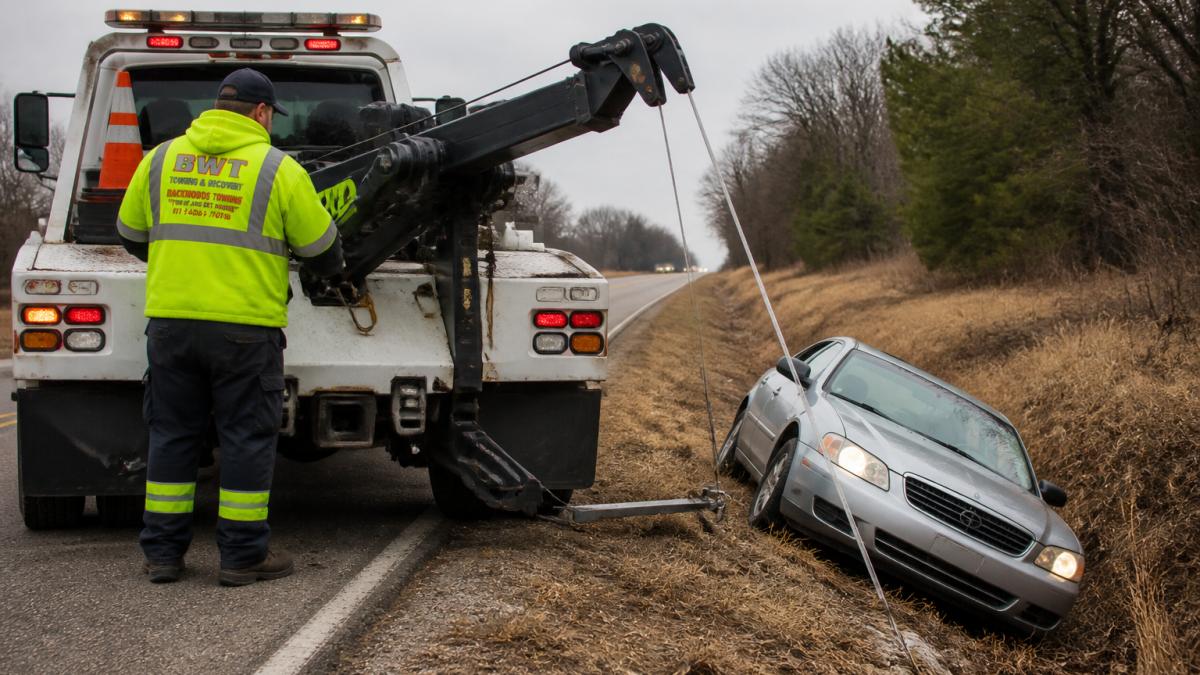
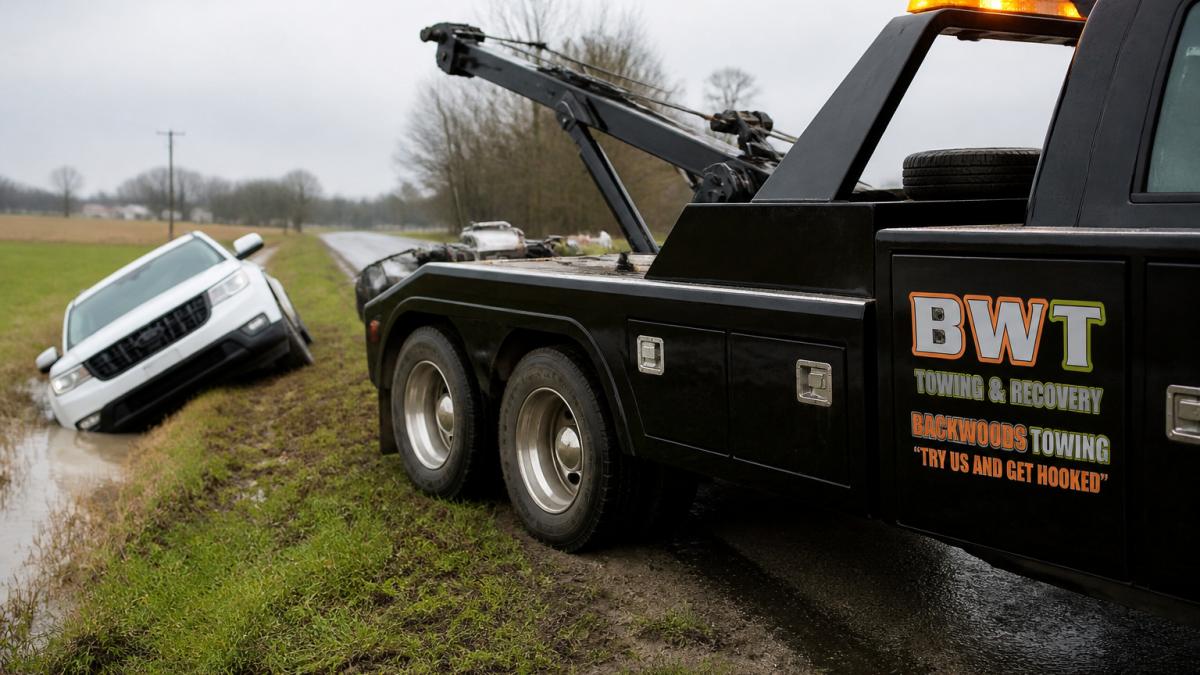
When your car ends up in a ditch, the recovery crew first assesses the angle and depth. Are the wheels still on solid ground, or is the vehicle resting on its frame? Is the ditch filled with water, mud, or dry earth?
For shallow ditches with firm ground, the tow truck operator may be able to hook directly to your vehicle's frame and pull it straight out. The operator uses a tow chain or strap rated for your vehicle's weight and pulls at a controlled angle to avoid flipping or rolling the vehicle.
Deeper ditches or soft ground often require a winch-out. The tow truck positions itself on stable ground above the ditch, then uses a powered winch to slowly pull your vehicle up and out. This method is slower but much safer for vehicles at steep angles.
Winch-Out vs. Standard Towing
A winch-out uses a motorized cable system to pull your vehicle from difficult positions. Standard towing hooks directly to your vehicle and pulls it out using the truck's power. The choice between them depends on your situation.
Standard towing works when your vehicle is accessible and the ground is solid. The operator can reach your vehicle safely, attach the tow chain, and pull. It's faster and less expensive than a winch-out. Most routine roadside recoveries use standard towing.
Winch-outs are necessary when your vehicle is deep in a ditch, stuck in mud, or at an angle that makes direct towing dangerous. The winch operator controls the pull speed precisely, which protects your vehicle from sudden jerks or rolling. Winch-outs cost more because they require specialized equipment and take longer, but they're often the only safe way to recover a badly stuck vehicle.
Ask your recovery service which method they recommend based on your situation. A professional crew will be honest about whether standard towing can work or if a winch is necessary.
Why Communication Matters During Vehicle Recovery
You're stranded, stressed, and waiting for help. Radio silence makes it worse.
When you call Backwoods Towing or any local recovery service, ask what their communication protocol is. Will they call you when they're 15 minutes away? Will they text updates? Do they have a way to track the tow truck on your phone?
During the recovery itself, stay in contact with the operator. If they're working on your vehicle, they may ask you questions: Is the steering wheel locked? Are the doors all the way closed? Is the parking brake engaged? These details matter for safe recovery. If you're not available to answer, the process takes longer.
After the recovery, confirm where your vehicle is being taken. Get the address and phone number of the destination. Ask about access hours if it's a garage or impound lot. Know whether you can pick up your vehicle immediately or if you need to wait for business hours.
24-Hour Towing Buffalo MO: Why Availability Matters
Breakdowns don't happen during business hours. They happen at 2 AM on a Sunday, or during a snowstorm on a holiday. Having access to 24-hour emergency vehicle recovery in Buffalo means you're never completely stranded.
Round-the-clock availability matters most in rural areas where other options are limited. If you break down at night on a back road, waiting until morning isn't safe. A 24-hour service dispatches a crew regardless of the time, weather, or day of the week.
Backwoods Towing operates 24/7 across Buffalo and surrounding communities. That means whether you're stranded at midnight or noon, you can call and reach a live dispatcher who can send help immediately. No answering machines. No waiting until the next business day.
When you're choosing a recovery service, ask about their availability directly. Some services claim 24-hour coverage but actually route calls to voicemail after hours. Others have limited crews at night, which means longer wait times.
Specialized Recovery Services for RVs and Trailers
Standard towing doesn't work for RVs, fifth-wheels, or trailers. These vehicles require specialized equipment and operators who understand their unique challenges.
RVs and trailers are heavier and wider than passenger cars. They need heavy-duty tow trucks with adequate capacity.
Specialized recovery operators also understand the structural differences in RVs and trailers.
If you own an RV or regularly pull a trailer in the Buffalo area, confirm that your recovery service has experience with these vehicles before you need help. Ask what equipment they have available. Do they have heavy-duty wench trucks? Can they handle fifth-wheels? Have they recovered trailers stuck in mud or ditches?
Backwoods Towing handles RV and trailer recovery as part of our specialized services. When you call, mention that you're in an RV or pulling a trailer so we dispatch the right equipment from the start.
Membership vs. Pay-Per-Call: What Makes Sense
You can pay for emergency vehicle recovery two ways: join a membership program and pay a flat annual fee, or call and pay per service when you need it.
Pay-per-call works if you rarely break down. You call a recovery service, they come help you, and you pay for that single service. No ongoing fees or commitments.
Membership programs charge an annual fee and cover multiple recovery calls throughout the year. Some memberships are tied to auto insurance or roadside assistance plans you already have. Others are standalone services.
When deciding between them, consider your driving habits. Do you spend a lot of time on rural roads far from towns? Do you drive an older vehicle? Do you tow a trailer regularly?
If you drive newer vehicles mostly in town and rarely venture far from help, pay-per-call is probably fine. You'll pay for service only when you actually need it.
Ask Backwoods Towing about both options when you call. We can explain which approach makes sense for your situation and what coverage looks like either way.
Getting stranded is stressful, but having a reliable recovery service nearby makes all the difference. When you need emergency vehicle recovery in Buffalo, knowing what to expect and who to call takes the panic out of the situation.
Frequently Asked Questions
What should I do while waiting for emergency vehicle recovery?
First, move to a safe location away from traffic if possible, turn on hazard lights and stay inside your vehicle with doors locked if you're on a highway. Turn off the engine to prevent fuel leaks. Avoid attempting recovery yourself, as this can cause further damage or injury. Stay calm and keep your phone charged. Provide your dispatcher with updates on your location if traffic or weather conditions change. If you feel unsafe, call local police for assistance while you wait.
What information should I give a towing company when I call?
Have ready your exact location (address, mile marker, or intersection), vehicle description (color, make, model, year), the nature of the problem (stuck, broken down, accident), and whether your vehicle is blocking traffic. Mention any special concerns like a full fuel tank, custom modifications, or whether doors are locked. If your vehicle is in a ditch or off-road, describe the terrain and any obstacles. Confirm whether you need standard towing or winch-out recovery. This information helps dispatchers send the right equipment and arrive prepared.
Can a towing company recover a vehicle stuck in mud or a ditch?
Yes, professional towing companies handle ditch and mud recoveries using winch equipment designed for these situations. A winch-out uses a powered cable and boom to pull your vehicle back to safe ground without dragging it through the mud, which could cause suspension or frame damage. The recovery approach depends on the angle of the vehicle, terrain conditions, and how deeply stuck it is. Always hire professionals for this work, attempting DIY recovery with personal equipment often causes more damage and creates safety hazards.
Why should I choose a 24-hour recovery service for emergency situations?
Breakdowns and accidents don't follow business hours, they happen at midnight on a back road just as often as mid-afternoon on a busy highway. A 24-hour service means you get professional help immediately, regardless of when disaster strikes. Quick response prevents you from being stranded in unsafe conditions, reduces the risk of additional damage to your vehicle from weather or traffic, and gives you peace of mind knowing expert help is always available. Local 24-hour providers also know the area's roads and can navigate to remote locations efficiently.