 comparison
How to Choose Between Towing and Roadside Assistance
Last Updated: October 25, 2026
Quick Summary
Towing vs roadside assistance serve different purposes: roadside assistance fixes problems on-site like dead batteries, flat tires, and lockouts, while towing transports vehicles that cannot be safely driven to a repair shop. Understanding which service you need prevents expensive surprises when stranded in Buffalo, Missouri.
- Roadside assistance typically has no upfront cost, while towing reimbursement requires customers to pay first
- Flat tire assistance works when you have a spare; if your spare is flat or damaged, you need towing instead
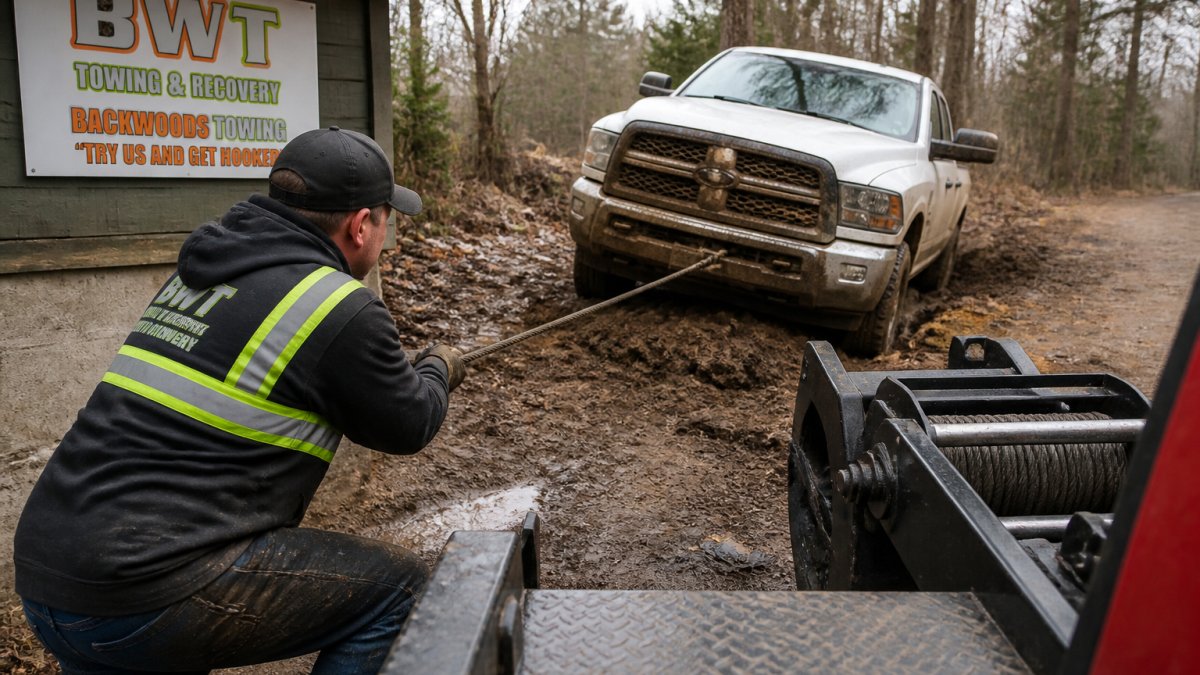
- Winch-out services extract stuck vehicles from mud or ditches using powered cables, preventing undercarriage damage
- Membership plans include towing reimbursement up to a certain distance, while pay-per-call towing costs are usually higher
- Professional operators in Buffalo provide 24-hour availability and maintain contact with drivers until arrival for safety
Table of Contents
- What's the Real Difference Between Towing and Roadside Assistance
- When to Call for Roadside Assistance in Buffalo, MO
- When to Call for Emergency Towing in Buffalo, MO
- Flat Tire Roadside Assistance in Buffalo, MO
- Vehicle Recovery and Winch-Out Services in Buffalo, MO
- Membership Plans vs. Pay-Per-Call Service
- Getting Help Fast: What to Expect When You Call
- Frequently Asked Questions
What's the Real Difference Between Towing and Roadside Assistance
Understanding towing vs roadside assistance is essential, as they are not the same service, though many drivers treat them interchangeably. The distinction matters because it shapes what help you'll actually receive when your vehicle breaks down in Buffalo, Missouri.
Roadside assistance covers on-site problems. Consumer Reports lists towing, jump-starting, locksmith services, fuel delivery, and flat-tire help among traditional roadside assistance services. A technician arrives at your location and solves the issue right there: they jump your dead battery, change your flat tire, deliver fuel, or unlock your door. You're back on the road within minutes or an hour.
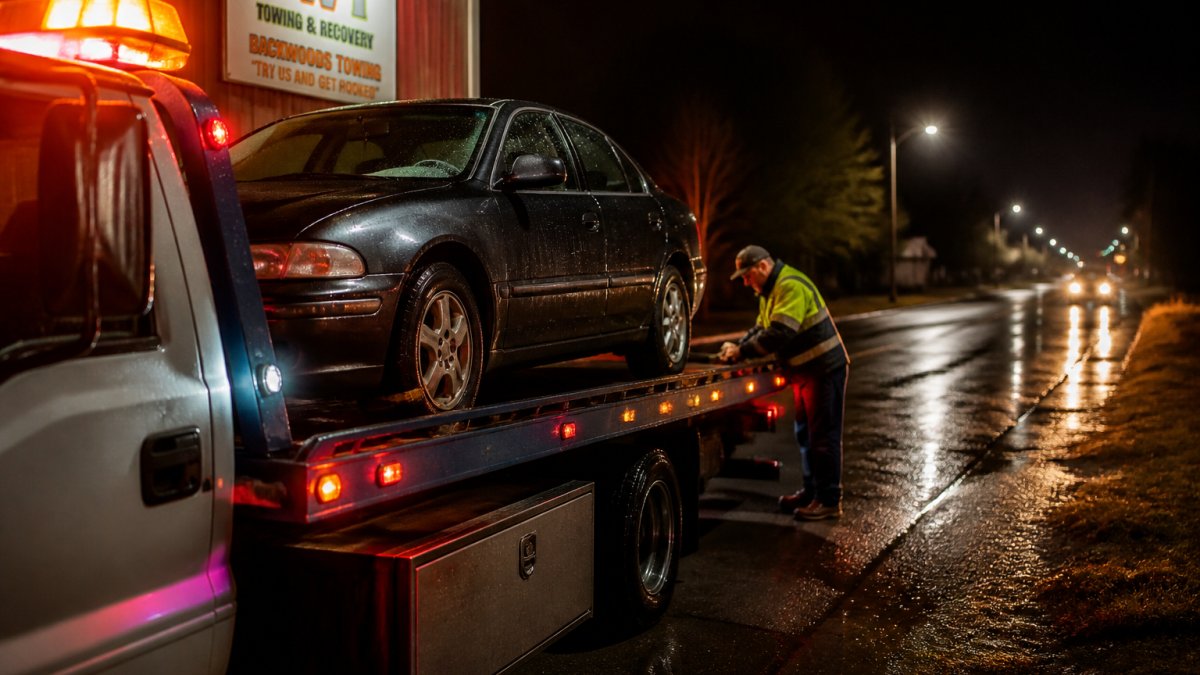
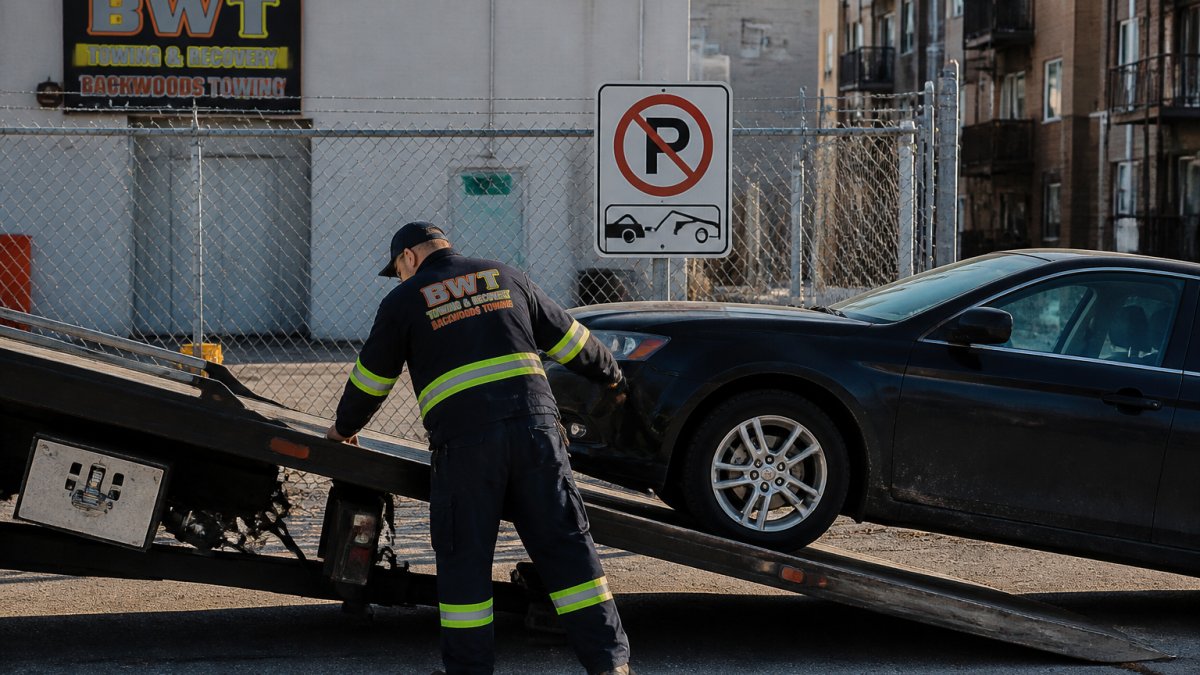
Towing transports your vehicle when it can't be fixed roadside. If your engine won't turn over, your transmission is shot, or you've been in a collision, a tow truck hauls your car to a repair shop or your home. This is recovery, not repair, the vehicle moves, but the problem stays with it.
At Backwoods Towing, we handle both. The critical insight most drivers miss: roadside assistance coverage and towing reimbursement are structurally different benefits. Roadside assistance typically has no upfront cost, while towing reimbursement requires the customer to pay first. Your insurance might cover one, the other, or neither. Knowing which applies to your situation prevents expensive surprises when you're stranded.
When to Call for Roadside Assistance in Buffalo, MO
Call for roadside assistance when your vehicle can be made roadworthy at the scene. Your battery is dead. Your tire is flat. You've locked your keys inside. You're out of fuel. These situations don't require transport, they require a technician with the right tools and knowledge.
Roadside assistance in Buffalo works best for problems that are temporary and fixable without a shop. A jump-start takes 15 minutes. A tire change takes 30 minutes. A lockout takes 20 minutes. You're stranded, but you're not broken down in the catastrophic sense.
The real value emerges when you're far from home. You're driving through Dallas County, your engine dies, and the nearest shop is 40 miles away. Roadside assistance gets you mobile again without a tow bill. Emergency Roadside Assistance: Your 24-Hour Guide walks you through what's covered and when to call.
Buffalo-area providers like Backwoods Towing advertise round-the-clock availability for these exact scenarios. When you call, you're not waiting for business hours. You're getting help now.
When to Call for Emergency Towing in Buffalo, MO
Call for emergency towing when your vehicle cannot be safely driven. Your engine seized. You've been in an accident. Your transmission is failing. Your suspension is broken. These aren't roadside fixes, they're shop repairs, and your car needs to get there.
Emergency towing also applies when you're stranded in a dangerous location. You've broken down on a highway shoulder with heavy traffic. You're stuck on a rural road at night with no cell service. You're in a ditch or off the pavement. Staying put isn't safe; moving the vehicle is the only option.
The difference between routine roadside assistance and emergency towing comes down to mobility and safety. Roadside assistance assumes your car can move under its own power once the immediate problem is solved. Towing assumes it cannot.
In Buffalo, emergency situations demand fast response. Emergency Towing Services Near Me: 24/7 Help details what to expect when you call for immediate recovery. Backwoods Towing responds 24 hours a day, 365 days a year. When you're stranded, the speed of response determines how long you're vulnerable.
Flat Tire Roadside Assistance in Buffalo, MO
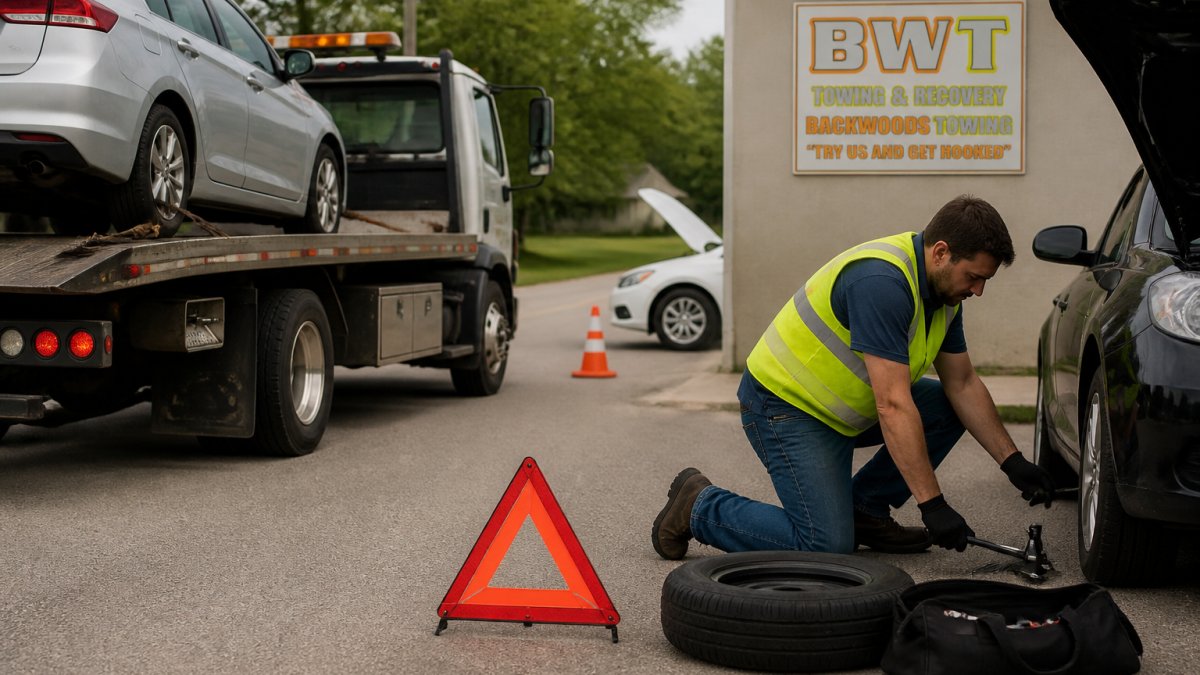
A flat tire is the textbook roadside assistance call. Your tire is damaged. You pull over safely. You call for help. A technician arrives, removes the damaged tire, and installs your spare. You're back on the road in 30 minutes or less.
But flat tire assistance has limits. If you don't have a spare, the technician can't complete the repair roadside. If your spare is also flat or damaged, you're in the same position. If your tire is damaged beyond simple repair, a sidewall puncture, a bead leak, severe wear, a patch won't hold, and you'll need a new tire from a shop.
The assumption behind roadside flat tire assistance is that the problem is fixable with basic tools and a spare. When that assumption breaks down, you need towing.
Can a Tow Truck Change a Flat Tire? Here's What to Know clarifies exactly what tow truck operators can and cannot do with tire emergencies. Most roadside assistance plans cover tire changes. Backwoods Towing includes flat tire help as part of standard roadside assistance coverage.
Vehicle Recovery and Winch-Out Services in Buffalo, MO
Vehicle recovery is specialized towing for vehicles that are stuck, not broken. Your truck is mired in mud after heavy rain. Your car has slid into a ditch. Your RV is bogged down on an unpaved road. Standard towing won't work because the vehicle can't be safely hitched and pulled, it needs to be extracted with a winch.
Winch-out services use powered cables and pulleys to extract a stuck vehicle without dragging it across rough terrain. This prevents additional damage to the undercarriage, suspension, and frame. For drivers with recreational vehicles, fifth-wheel campers, or trucks that venture off-road, winch-out capability isn't optional, it's essential.
Buffalo's terrain and seasonal weather create winch-out situations regularly. Spring thaw turns back roads to mud. Heavy rain floods low-lying areas. Winter ice sends vehicles off the pavement. Drivers who don't have winch-out access available locally face expensive recovery bills from distant operators.
Winch Out Service: What It Is and When You Need It explains the mechanics and cost-benefit of specialized recovery. Backwoods Towing maintains winch equipment and trained operators for exactly these scenarios. If you're stuck, truly stuck, not just broken down, you need recovery, not towing.
| Service Type | Best For | Response Time | Cost Structure |
|---|---|---|---|
| Roadside Assistance | Dead battery, flat tire, lockout, fuel delivery | 30-60 minutes | Membership or pay-per-call |
| Emergency Towing | Engine failure, accident, non-drivable vehicle | 30-90 minutes | Membership or pay-per-call |
| Vehicle Recovery | Stuck in mud, ditch, or off-road | 45-120 minutes | Specialized pricing |
Membership Plans vs. Pay-Per-Call Service
This decision shapes your entire roadside safety strategy. Membership plans charge an annual or monthly fee. You pay upfront, and calls are either free or heavily discounted. Pay-per-call means you pay only when you need help, but each call costs more.
Membership makes sense if you drive frequently, travel long distances, or own multiple vehicles. The annual cost spreads across many potential calls. If you break down twice a year, membership pays for itself. If you break down once every five years, pay-per-call is cheaper.
Pay-per-call makes sense if you drive rarely, stay close to home, or have other safety nets. You're not paying for coverage you won't use. But when you do need help, the bill arrives when you're already stressed.
The hidden factor most drivers overlook: membership plans often include towing reimbursement up to a certain distance. Pay-per-call towing costs are usually higher because there's no pre-negotiated rate. Are 24-Hour Towing Services Worth the Cost? breaks down the financial math for different driving patterns.
The right choice depends on your actual driving habits, not what you think they are.
Getting Help Fast: What to Expect When You Call
When you call for roadside assistance or towing, the first 60 seconds set the tone for the entire experience. You're stressed, possibly unsafe, and you need to communicate clearly with a dispatcher.
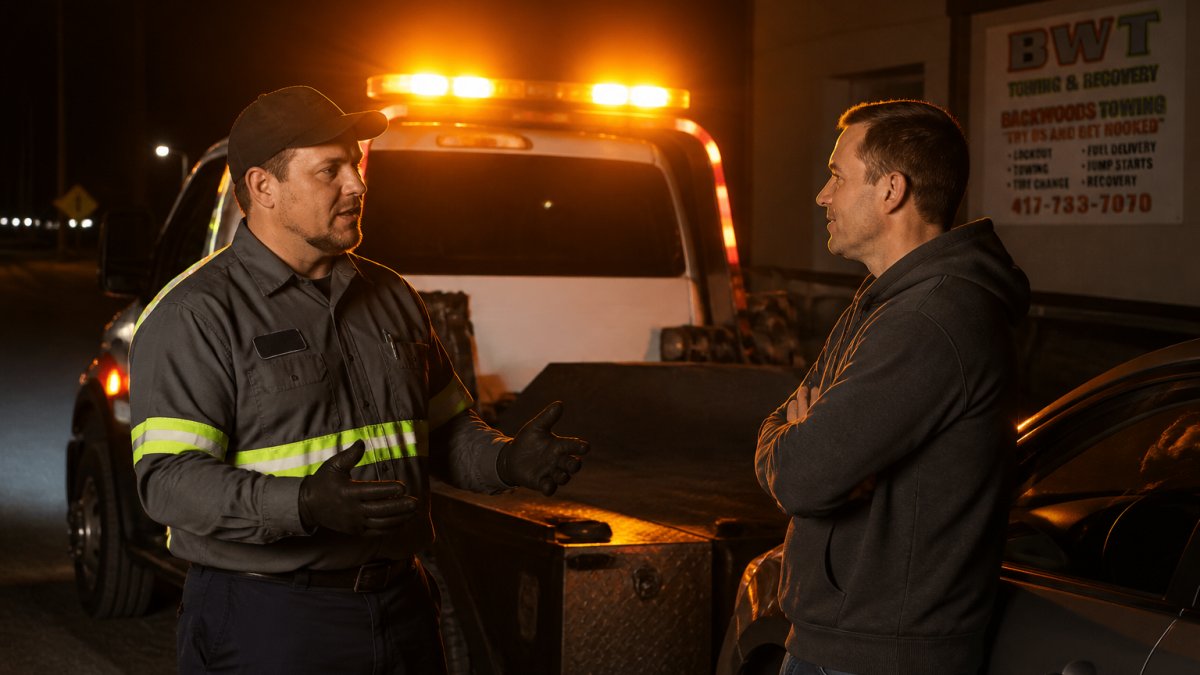
Provide your location first. "I'm on Route 32, three miles east of Buffalo, near the old grain elevator." Vague directions waste 20 minutes. Your exact location determines response time and which operator is closest.
Describe your problem next. "My engine won't start" is clearer than "my car is broken." Tell the dispatcher if you're in a safe location or stuck on an active roadway. Tell them if you have passengers, children, or pets with you. This information shapes the response priority.
Ask for an estimated arrival time. Professional operators provide this. AAA reported that it responded to more than 30 million roadside events near active traffic in 2025, and response times vary based on location and demand. A 45-minute wait in Buffalo on a quiet Tuesday is different from a 90-minute wait on a busy Friday night.
Stay on the line if you feel unsafe. Let the dispatcher know if traffic is heavy or weather is deteriorating. Backwoods Towing dispatchers maintain contact with drivers until the operator arrives. This isn't just customer service, it's safety protocol.
When the operator arrives, verify their identity before opening your vehicle. Professional operators carry credentials. They'll explain what they're doing before they do it. They'll answer questions about your vehicle's condition. Communication throughout the process prevents surprises and builds confidence in the service.
Choosing between towing vs roadside assistance in Buffalo comes down to understanding what each service actually does and what your situation requires. Roadside assistance fixes problems on-site. Towing moves vehicles that can't be fixed roadside. Membership plans provide predictability; pay-per-call offers flexibility. When you're stranded, the operator who arrives with clear communication and the right equipment makes the difference between a manageable inconvenience and a costly disaster. Backwoods Towing provides both services 24 hours a day with experienced operators who know the Buffalo area. Call now for immediate assistance when you need it most.
Frequently Asked Questions
What is the difference between towing and roadside assistance?
Roadside assistance handles problems you can fix on-site: jump-starts, lockouts, fuel delivery, and flat tire changes. Towing transports your vehicle when it cannot be made roadworthy at the scene. A dead battery gets a jump-start (roadside assistance); a seized engine gets towed. Roadside assistance aims to get you moving within minutes. Towing moves your vehicle to a repair shop when repair on-site isn't possible.
Can roadside assistance fix a flat tire in Buffalo, MO?
Yes. Flat tire assistance is a core roadside service that includes tire change and repair. A provider will arrive, assess the damage, and either repair or replace the tire on-site so you can drive safely. If the tire is beyond repair or you lack a spare, the provider can tow your vehicle to a shop. Most drivers get back on the road within 30 minutes.
When should I call for a tow instead of roadside assistance?
Call for towing if your vehicle cannot be driven safely: the engine won't start despite a jump-start, the transmission is damaged, the vehicle is stuck in mud or off the road, or you've been in a collision. Call roadside assistance for problems fixable on-site: dead battery, lockout, flat tire, or empty fuel tank. If you're unsure, call and describe the situation; the dispatcher will recommend the right service.
Do you have experience towing RVs and fifth-wheel campers in Buffalo, MO?
Yes. Specialized towing for recreational vehicles and fifth-wheel campers requires different equipment and expertise than standard car towing. Backwoods Towing offers vehicle recovery and winch-out assistance for RVs and trailers. When you call, mention that you're towing an RV or camper so the dispatcher sends the right equipment and operator for your setup.