 ultimate-guide
Emergency Roadside Assistance: Your 24-Hour Guide
Table of Contents
- What to Do When Your Vehicle Breaks Down
- 24-Hour Towing Services When You Need Immediate Recovery
- Flat Tire Assistance: Fast Roadside Repairs
- Car Lockout Service: Regain Access Fast
- Jump-Start Service: Get Your Engine Running Again
- Specialized Recovery: Winch-Outs and Off-Road Assistance
- Staying Safe While You Wait for Help
- Choosing the Right Roadside Assistance Option for Your Needs
- Frequently Asked Questions
Last Updated: October 9, 2026
What to Do When Your Vehicle Breaks Down
Your car sputters to a stop on the shoulder. The first moments matter most: panic doesn't help, but a clear head and the right steps do. At Backwoods Towing, we handle emergencies like this every day, from rural highways to parking lots.
Assess Your Situation and Location
The moment your vehicle fails, take a breath and evaluate what's happening. Is the engine smoking? Strange noises? Lost power?
Your location matters just as much. On a busy highway, safety is the immediate priority; on a quiet road in Buffalo, MO, or a rural area, you have slightly more time.
Move to Safety If Possible
If your vehicle is still operational and you're on a busy road, move to the safest spot available: a wider shoulder, a parking lot, or a side street, away from active traffic lanes.
Turn on your hazard lights immediately. If you have reflective triangles or flares, deploy them behind your vehicle, typically 100 feet on highways, less on local roads.
Call for Help Immediately
Don't wait to see if the problem resolves itself. Call for roadside assistance as soon as you recognize your vehicle won't start or move safely.
Clear communication saves time. Instead of "my car won't work," say "my engine won't turn over" or "I have a flat tire on the rear driver's side." Ask for an estimated arrival time and a confirmation number, a reliable emergency roadside assistance service will give you both.
24-Hour Towing Services When You Need Immediate Recovery
Not every breakdown can be fixed on the roadside. Sometimes your vehicle needs a shop, which requires professional towing.
When Towing Is Your Only Option
Towing becomes necessary when your vehicle cannot be safely driven. A blown engine, transmission failure, severe collision damage, complete loss of brakes, or a vehicle stuck in a ditch all require professional recovery.
In Buffalo, MO, and the surrounding region, many breakdowns happen on rural roads where self-help isn't an option.
What to Expect During Transport
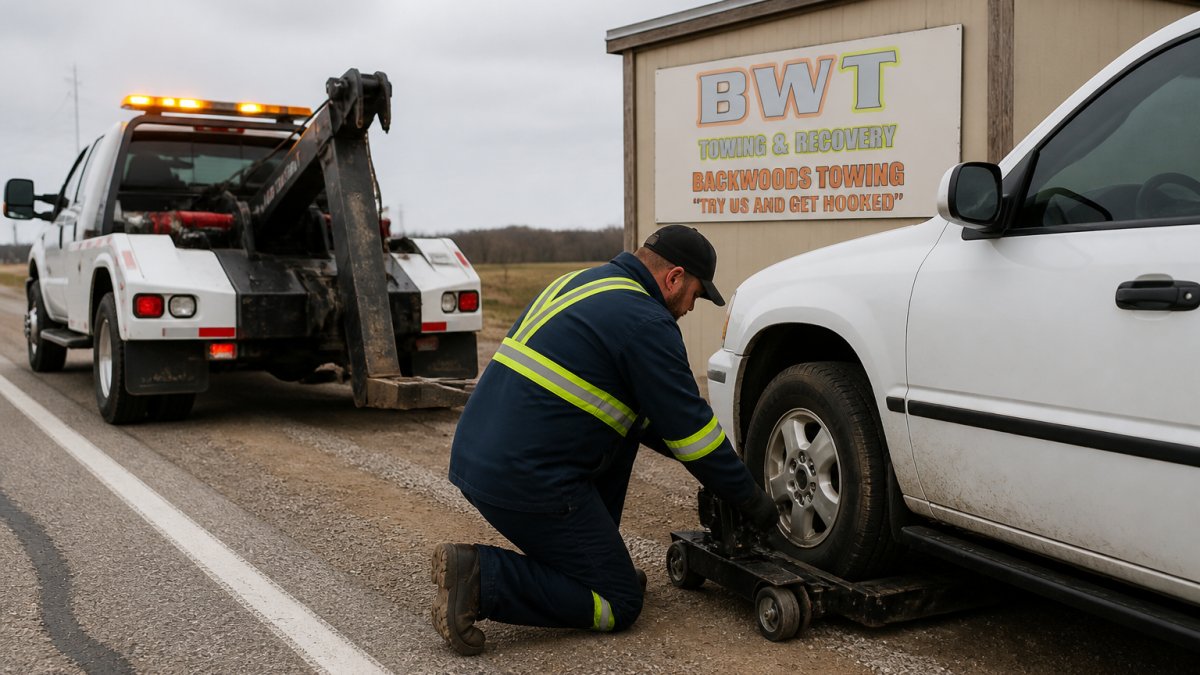
When the tow truck arrives, the operator will assess your vehicle and plan the safest recovery method, using a flatbed or wheel-lift system depending on condition and drivetrain.
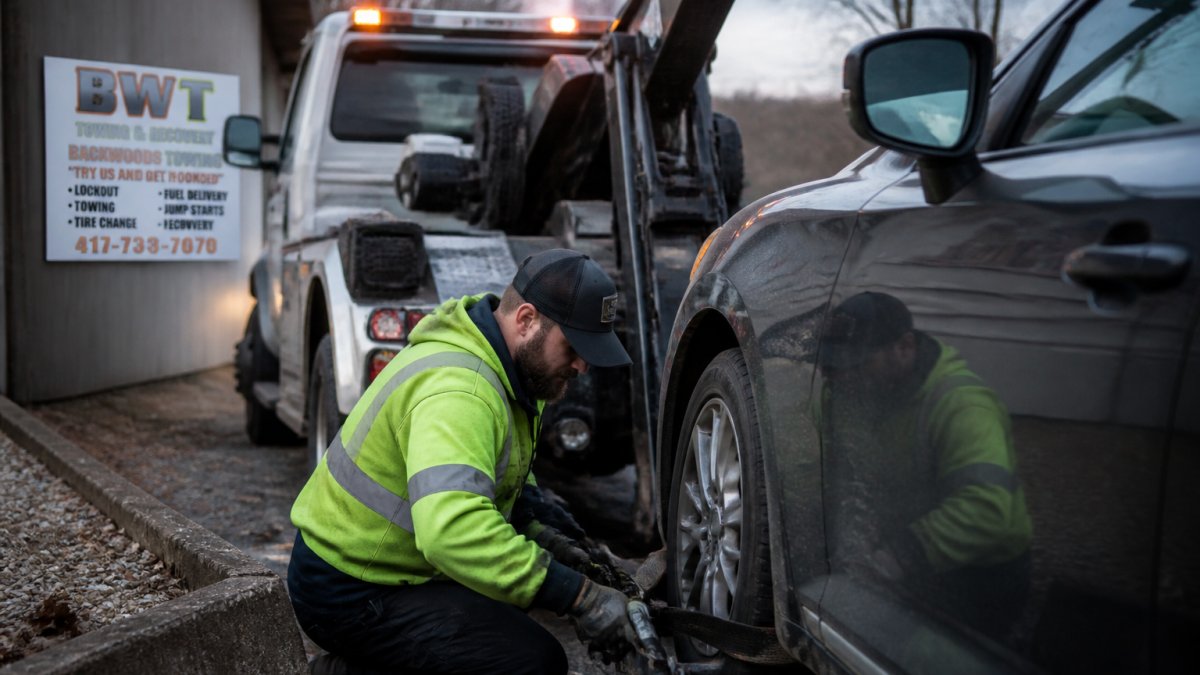
The operator will secure your vehicle with straps and chains, checking multiple points for stability. During transport, your vehicle is insured and protected; reputable towing services carry liability coverage.
Flat Tire Assistance: Fast Roadside Repairs
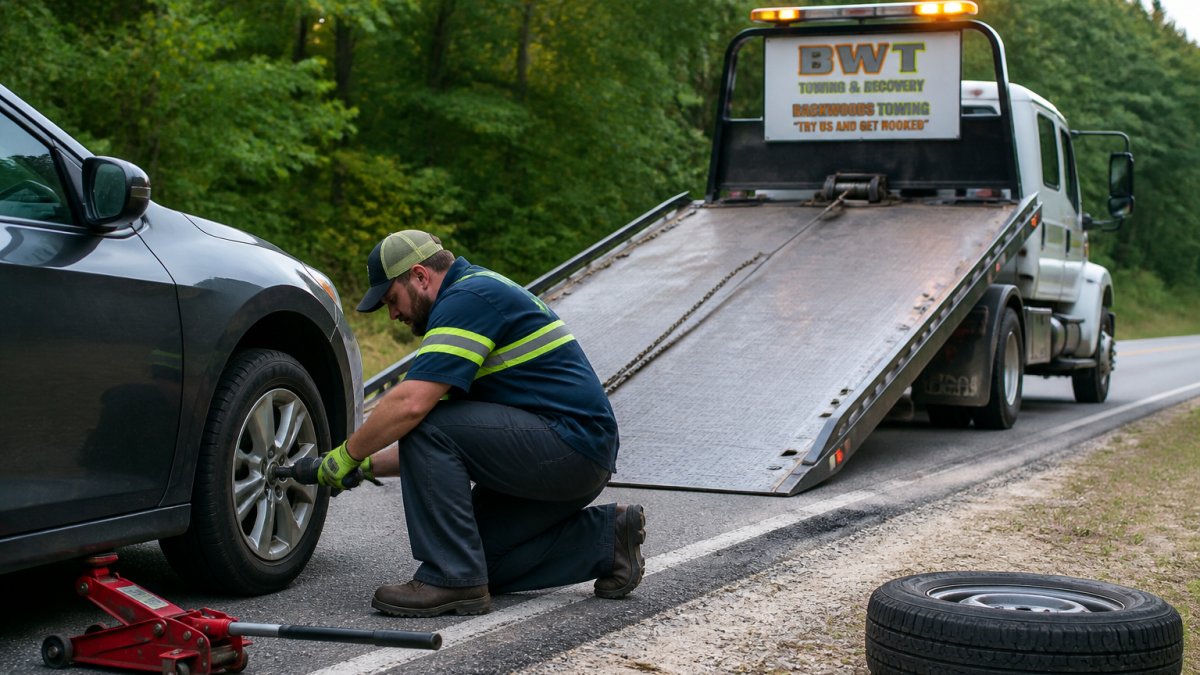
A flat tire doesn't always mean a tow. Many flats can be repaired or replaced right on the roadside, getting you moving in minutes rather than hours.
Tire Changes on the Roadside
A flat from a nail, screw, or small puncture can often be repaired without removing the wheel. Professional roadside assistance technicians can perform a proper plug repair.
If the damage is too severe, a sidewall puncture, multiple holes, or a gash, the tire must be replaced.
When to Repair vs. Replace
A small puncture in the tread can be repaired. Sidewall damage means replacement, the sidewall cannot hold air reliably after a puncture repair. Multiple flats or an already-worn tire also call for replacement.
Age matters too. Tires older than 10 years should be replaced even if they look fine; the rubber degrades and blowouts become more likely.
Car Lockout Service: Regain Access Fast
You reach for your keys and realize they're on the driver's seat, doors locked. A car lockout service can have you back inside in minutes without damaging your vehicle.
Professional Unlocking Without Damage
Modern vehicles have sophisticated locking systems.
The process involves using specialized tools to manipulate the internal mechanism and release the lock from inside, no broken glass or damaged paint.
When you call for car lockout service in Buffalo, MO, confirm the provider has experience with your make and model.
Prevention and Spare Key Strategy
The best lockout is the one that never happens. Keep a spare key at home or with a trusted friend, not in your vehicle or wallet.
Digital key storage is another option. Some vehicles support smartphone apps that unlock doors remotely. Check your manual, and if it's available, set it up before you need it.
Jump-Start Service: Get Your Engine Running Again
A dead battery is one of the most common roadside emergencies: the vehicle won't start, the dashboard lights are dim or dark, and you're stuck. A professional jump-start service can get your engine running in minutes.
How Professional Jump-Starts Work
A jump-start connects your dead battery to a working one using heavy-gauge jumper cables.
The process involves connecting your dead battery to a working one using heavy-gauge jumper cables. Once connected, the working vehicle's engine runs for a minute or two, then your engine is started.
Battery Health and When to Replace
If your vehicle starts after a jump-start, the battery may simply have been drained by lights left on or a door ajar. Drive to a shop and have it tested. If it keeps dying or won't hold a charge, replacement is necessary. Modern batteries last 3-5 years depending on climate and driving habits; past five years, replacement is likely overdue.
Specialized Recovery: Winch-Outs and Off-Road Assistance
Some breakdowns happen off the pavement. A vehicle stuck in mud, sand, or a ditch needs specialized recovery equipment. Winch-outs and off-road recovery require expertise and the right gear, this is where general roadside assistance reaches its limits.
When Your Vehicle Gets Stuck
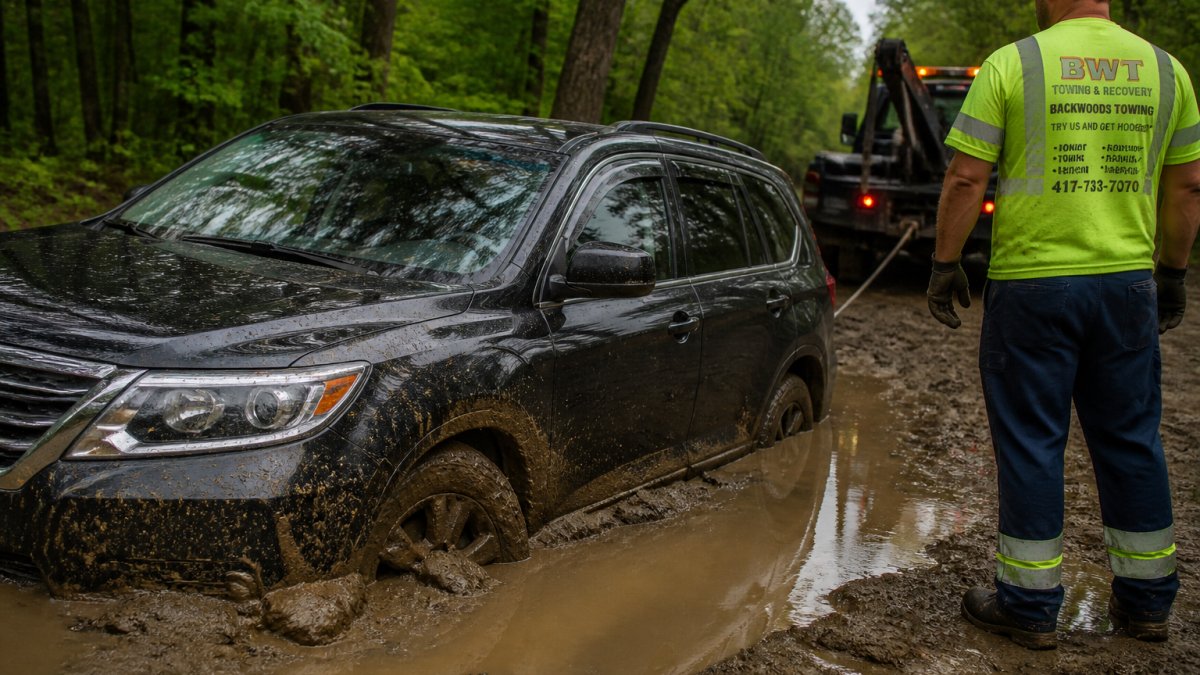
Mud, snow, sand, or a ditch can trap your vehicle in seconds, and trying to drive out usually digs you deeper and causes damage.
The process is slow and deliberate; rushing damages your frame or suspension. A professional recovery operator knows the proper attachment points and safe winching speed, and will assess soil conditions to plan a damage-minimizing extraction.
RV and Heavy Equipment Recovery
Recreational vehicles and trailers require specialized recovery knowledge.
Fifth-wheel campers, travel trailers, and motorhomes each pose unique challenges, and some require multiple recovery vehicles working in coordination.
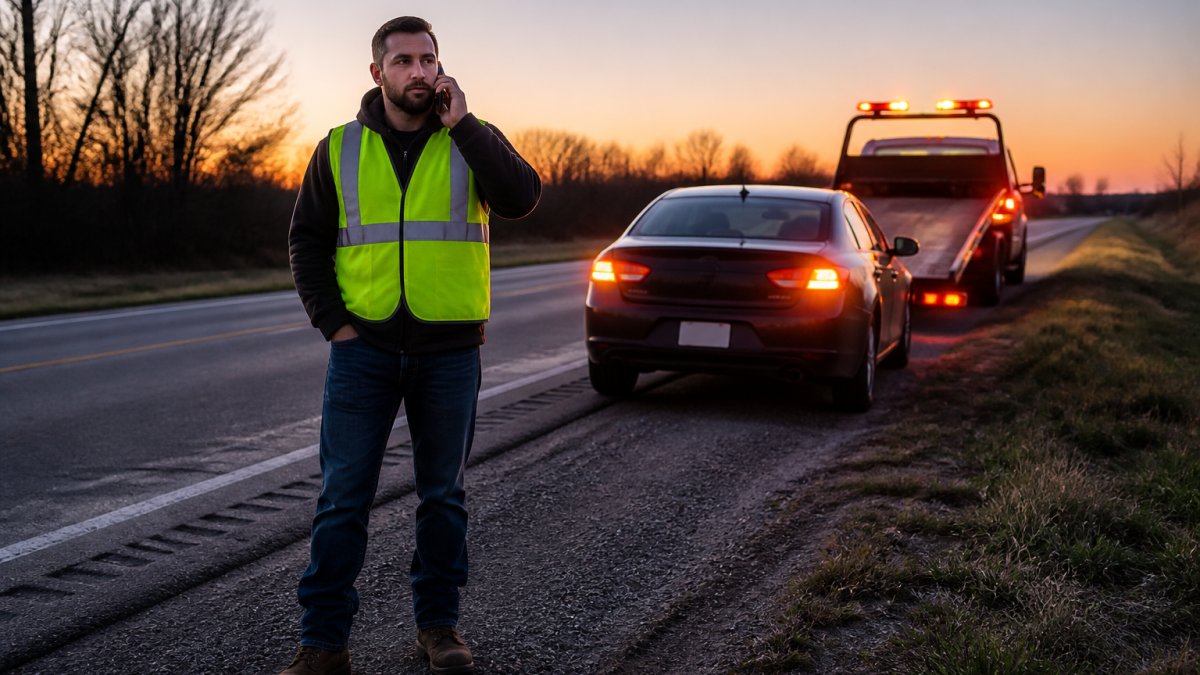
Staying Safe While You Wait for Help
The time between your breakdown and the arrival of help is the most dangerous part of your emergency. You're vulnerable on the roadside, and other drivers may not see you. Staying visible, calm, and safe are your top priorities.
Visibility and Communication
Turn on your hazard lights immediately, your most visible signal to other drivers.
Wear a reflective vest if you have one.
Keep your phone charged and stay in contact with the dispatcher. If the battery is low, dim the screen and close unnecessary apps. Ask for regular arrival updates to stay focused on safety.
Protecting Yourself on the Roadside
Stay inside your vehicle with doors locked until help arrives, especially if you're alone or stranded at night.
If you're stranded in an unfamiliar area, don't accept help from strangers.
In cold weather, run your engine periodically to stay warm, cracking a window to prevent carbon monoxide buildup. In hot weather, stay hydrated and keep the air conditioning on.
Choosing the Right Roadside Assistance Option for Your Needs
When you call for help, you face a choice: membership plans or on-demand services. The right pick depends on how often you drive and how much certainty you want.
Membership vs. On-Demand Services
A roadside assistance membership costs a flat fee per year and covers unlimited calls. On-demand services charge per call, so you pay only when you use them.
Membership plans make sense if you drive frequently, own an older vehicle, or travel long distances regularly.
Questions to Ask Before Calling
Before an emergency, research your options. Call potential providers and ask:
Response Time: What's the average arrival time in your area? Backwoods Towing and other local providers can give realistic expectations based on location.
Equipment: What recovery types do they handle?
Communication: How will they keep you updated?
Damage Protection: Are they insured?
Pricing: What's included in membership, and are there distance or call limits?
The answers reveal which provider is most reliable for your situation.
| Service Type | Best For | Response Time | Cost Structure |
|---|---|---|---|
| Membership Plan | Frequent drivers, older vehicles, peace of mind | Usually 30-60 minutes | Annual fee, unlimited calls |
| On-Demand Service | Occasional drivers, newer vehicles, budget-conscious | Varies by demand | Per-call charges |
| Local Provider (Backwoods Towing) | Buffalo, MO residents, familiar service | Membership or per-call options | |
| National Membership | Long-distance travelers, nationwide coverage | Annual fee, varies by tier |
Roadside emergencies test your composure and preparation.
Frequently Asked Questions
What should I do first if my vehicle breaks down on the road?
Turn on your hazard lights immediately, move to a safe location away from traffic if possible, and call for emergency roadside assistance. Provide your exact location, vehicle description, and the nature of your problem. Stay inside your vehicle with doors locked if you're on a busy highway, and keep your phone charged. Clear communication with your dispatcher ensures help arrives faster and responders know what to expect.
How quickly can I expect emergency roadside assistance to arrive?
Response times vary based on your location and current service demand. Local providers prioritize calls and aim for rapid dispatch. When you call, ask for an estimated arrival time and request status updates. Reliable services maintain clear communication throughout the wait. Weather, traffic, and how remote your location is all affect timing, so patience and staying in contact with your dispatcher matters.
Can roadside assistance help with a flat tire or lockout, or do I need a tow?
Many roadside emergencies don't require a full tow. Flat tire assistance includes on-site repairs or tire changes. Car lockout services unlock your vehicle without damage. Jump-start service restores a dead battery. Fuel delivery gets you back on the road if you've run out of gas. You only need towing if your vehicle cannot be safely driven, is damaged, or stuck in a location where roadside repair isn't possible.
What information should I give to a roadside assistance dispatcher?
Provide your exact location (street address, mile marker, or landmarks), vehicle year/make/model and color, license plate number, and a clear description of what happened. Mention any hazards (heavy traffic, darkness, weather). If you're injured or feel unsafe, say so immediately. Stay on the line if requested and confirm the dispatcher has your phone number for follow-up. Accurate details speed up dispatch and ensure the right equipment arrives.
Do you handle RV and fifth-wheel camper towing and recovery?
Yes. RV and heavy equipment recovery requires specialized equipment and expertise. Winch-outs, trailer extraction, and safe transport of large vehicles demand experienced operators who understand weight distribution and proper securing methods. If you own an RV or regularly tow a fifth-wheel camper, confirm that your roadside assistance provider has experience with your specific vehicle type before an emergency occurs.
When should I choose a membership plan versus calling for on-demand assistance?
Membership plans suit drivers who want predictable coverage, priority dispatch, and peace of mind. On-demand services work for occasional breakdowns. Consider how often you drive long distances, your vehicle's age and reliability, and whether you tow equipment. On-demand is simpler if breakdowns are rare. Review what each option covers and choose based on your actual driving patterns.
What makes professional towing safer than attempting a DIY tow?
Professional operators have proper equipment, training, and liability insurance. They know how to secure vehicles correctly to prevent damage during transport, use appropriate tow points, and handle different vehicle types safely. DIY towing risks damage to both vehicles, injury, and liability if something goes wrong. Professional services ensure your vehicle arrives at its destination intact and you avoid the physical and legal risks of improper towing.