 how-to
Car Stuck in Mud: Step-by-Step Recovery Guide
Table of Contents
- What to Do First When Your Car Gets Stuck in Mud
- How to Get Traction When Stuck in Mud
- Using Recovery Boards to Extract Your Vehicle
- Safe Driving Techniques to Avoid Damage
- When to Call a Tow Truck for a Stuck Car
- How to Use a Winch to Recover a Vehicle
- Common Mistakes to Avoid When Stuck
- Frequently Asked Questions
Last Updated: October 12, 2026
What to Do First When Your Car Gets Stuck in Mud
When your car stuck in mud situation happens, panic won't help. Your first move is to stay calm and assess the situation. Turn off your engine and evaluate how deep your vehicle has sunk.
Check if you can see the undercarriage. If mud covers your wheels completely, you're dealing with a serious situation. If only the lower portions are stuck, you have more options.
Don't spin your wheels. This is the biggest mistake people make. Spinning tires dig you deeper into the mud and make recovery harder. Instead, shift into reverse and gently try backing out.
Try this simple test: ease off the gas and let your tires find traction naturally. Sometimes gentle pressure works when aggressive acceleration fails. If the vehicle doesn't budge after one or two gentle attempts, stop and move to traction methods.
The key is understanding what happens when tires lose grip on slippery surfaces.
Turn on your hazard lights immediately. Other drivers need to see you. If you're on a roadway, this also signals that you need help. Call for assistance early if you're in a dangerous location or if initial recovery attempts fail.
How to Get Traction When Stuck in Mud
Traction is everything when your car gets stuck in mud. Without grip between your tires and the ground, you're going nowhere. The goal is to create a surface your tires can bite into.
Materials That Work for Tire Traction
Rocks work well for traction. Gather fist-sized stones and wedge them under and around your tires. This creates a rough surface that helps your tires grip.
Branches and sticks provide similar help. Break them into manageable pieces and pack them tightly around the tire base. Layer them to build height and stability.
Cardboard, plywood, or boards offer excellent traction. Place them flat under your tires. The flat surface distributes your vehicle's weight and prevents further sinking. If you have plywood in your vehicle, this is your best option.
Sand or gravel works if you have it available. Pour it around the tire base. This fills gaps and creates friction. You'll need a decent amount for real effect.
Floor mats from inside your vehicle can help. Turn them upside down and wedge them under your tires. The rubber bottom grips better than the fabric top.
Cat litter or kitty litter is surprisingly effective. Spread it generously around your tires. The granules create friction and help your tires grip.
Burlap or old carpet scraps can work in a pinch. Lay them flat under your tires. They provide traction and help distribute weight.
Proper Tire Pressure Adjustments
Lower tire pressure increases the tire's contact area with the ground. This spreads your vehicle's weight over more surface and improves grip.
Reduce your tire pressure by 5-10 PSI from normal. Don't go too low or you risk damaging the tire sidewalls. Check your vehicle's door jamb for the recommended pressure, then drop it slightly below that number.
Lower pressure makes tires wider and flatter. This wider footprint grips muddy terrain better. The tire can conform to the uneven surface rather than sinking through it.
After you escape the mud, reinflate your tires to the proper pressure. Driving on low pressure long-term damages tires and reduces fuel efficiency. Stop at a gas station with an air pump as soon as you're on solid ground.
Don't overdo pressure reduction. Extremely low pressure can damage rims and cause tire failure. Stay within 5-10 PSI of normal to keep your tires safe.
Using Recovery Boards to Extract Your Vehicle
Recovery boards are purpose-built tools for this exact situation. They're flat, sturdy platforms that distribute your vehicle's weight and provide traction. Many off-road enthusiasts keep them in their vehicles.
Recovery boards work by spreading your weight across a larger area. Instead of your tires sinking into mud, the boards prevent that sinking and create a stable surface to drive on. They're especially useful when other traction materials aren't available.
Place the boards flat under your tires, aligned with your direction of travel. Make sure they're positioned so your tires will drive directly onto them. Secure them if possible to prevent shifting.
Slowly drive forward onto the boards. Don't accelerate hard. Gentle, steady pressure lets the tires climb onto the boards without slipping off. Once your front tires are on the boards, continue slowly until your rear tires are also on them.
Keep moving forward at a steady pace. The boards will help you gain traction as you move. Once you reach firmer ground beyond the boards, you're free to continue normally.
Recovery boards come in different materials. Plastic boards are lighter and easier to carry. Metal boards are more durable but heavier. Either type works well for mud recovery.
Safe Driving Techniques to Avoid Damage
Avoid the urge to floor the accelerator. Spinning tires cause damage to your vehicle and dig you deeper. Gentle, steady pressure works better than aggressive acceleration.
Rock your vehicle back and forth if you're slightly stuck. Shift between reverse and drive slowly. This small rocking motion can build momentum without the damage of spinning tires. Stop if you're not making progress after a few attempts.
Protect your undercarriage from damage. Avoid sharp rocks or debris under your vehicle. Mud can hide obstacles that puncture fuel tanks or damage suspension components. Drive slowly through muddy areas and stay alert.
Check your engine temperature gauge while working to escape. Excessive spinning and engine strain can cause overheating. If your temperature gauge climbs, stop and let the engine cool before continuing.
Avoid turning your wheels while stuck. Turning increases the force needed to move forward and can cause tire damage. Keep wheels straight until you're moving freely again.
When to Call a Tow Truck for a Stuck Car
Know when to stop trying and call for help. If your car stuck in mud doesn't budge after 10-15 minutes of gentle attempts, professional recovery is your best option.
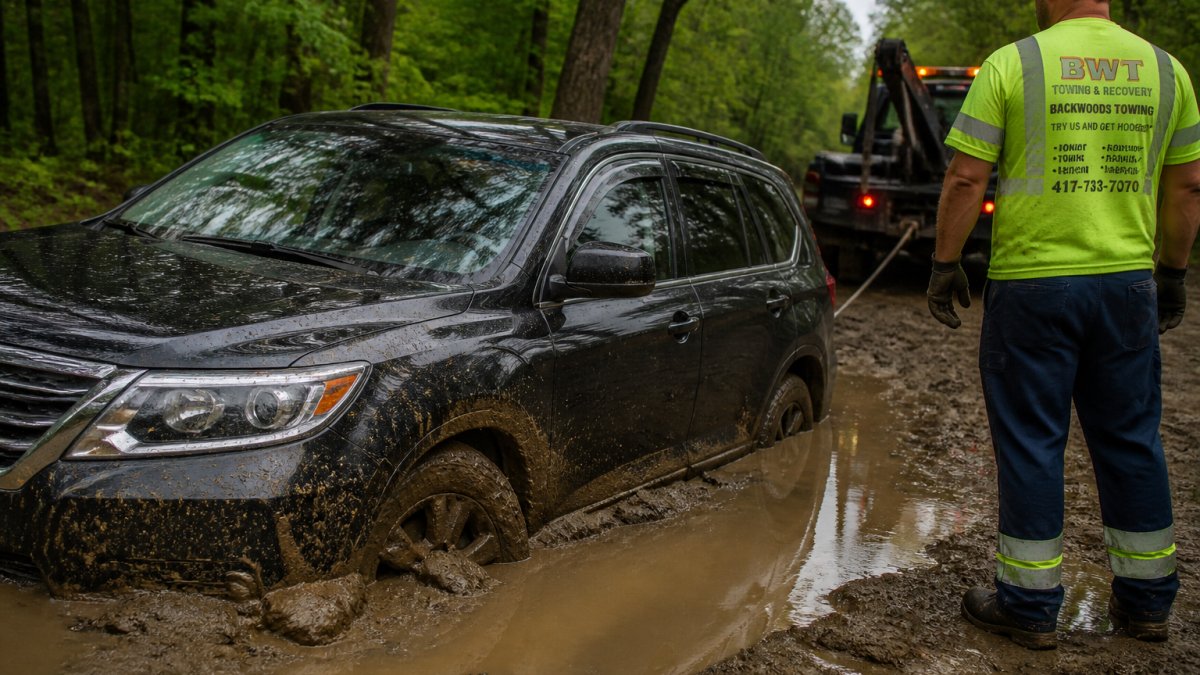
Call a tow truck if your vehicle has sunk significantly. When mud covers your wheels or undercarriage, DIY methods rarely work. Professional equipment and experience make the difference.
You need professional help if you're in a dangerous location. Roadside recovery puts you in traffic danger. A tow truck operator has safety equipment and training to work near moving vehicles safely.
Call immediately if you're alone and uncomfortable with the situation. There's no shame in getting professional help. Backwoods Towing operates 24/7 in the Buffalo area.
Vehicle damage risk increases the longer you're stuck. Repeated spinning damages your transmission and engine. Professional recovery prevents this damage and gets you out faster.
If you're in a remote location with no cell service, stay with your vehicle. Mark your location when you regain service. Professional towing services can locate you and provide recovery.
How to Use a Winch to Recover a Vehicle
A winch is powerful equipment that can pull your vehicle out of nearly any situation. It uses mechanical advantage to apply tremendous pulling force. Proper setup and safety precautions are essential.
Winch Setup and Safety Precautions
Identify a solid anchor point before attaching your winch cable. This must be a tree, rock, or fixed structure that can handle the pulling force. Never use a small tree or weak anchor point.
Inspect your winch cable for damage. Look for frayed sections, kinks, or rust. Damaged cable can snap under load and cause serious injury.
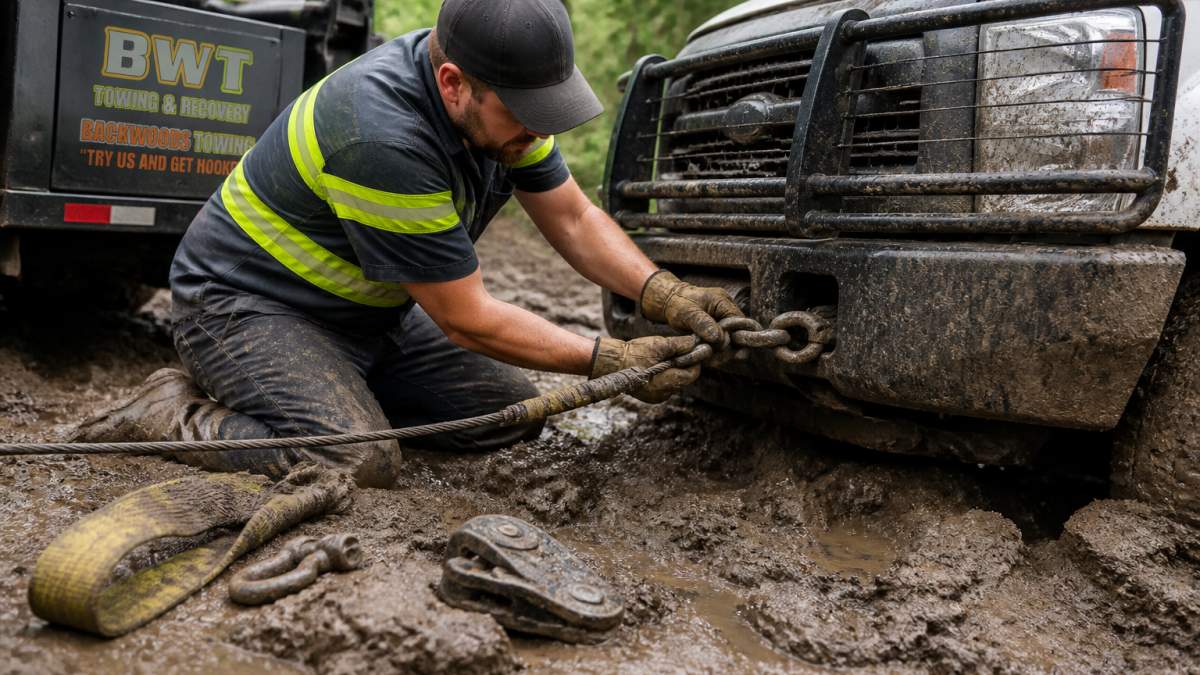
Attach the cable to a proper recovery point on your vehicle. Most vehicles have designated towing points on the frame. Never attach to bumpers or other non-structural parts.
Clear the area around your winch operation. People should stand well away from the cable path. A snapping cable can cause severe injury. Keep bystanders at least 30 feet away.
Wear safety glasses and gloves when operating a winch. The cable can snap suddenly. Protective equipment reduces injury risk if something goes wrong.
Pulling Your Vehicle Out Safely
Start with gentle tension on the cable. Don't jerk the vehicle. Steady, increasing pressure is safer and more effective than sudden force.
Pull at an angle if possible. Pulling straight out can be harder than pulling at a 45-degree angle to the stuck position. This changes how the vehicle shifts in the mud.
Monitor the cable tension constantly. Stop if the cable shows signs of stress or unusual vibration. Equipment failure under load is dangerous.
Communicate with the anchor vehicle operator. Use hand signals or radio contact. Clear communication prevents accidents and ensures smooth recovery.
Once your vehicle starts moving, maintain steady pressure. Don't stop and start repeatedly. Continuous, steady pulling works better than on-and-off pressure.
Stop immediately if you hear unusual sounds from your vehicle. Grinding, cracking, or popping noises indicate damage. Professional recovery is better than causing thousands in repairs.
Common Mistakes to Avoid When Stuck
Spinning your wheels is the number one mistake. This digs you deeper and damages your transmission. Gentle attempts work better than aggressive ones.
Pulling at wrong angles damages your vehicle's frame and suspension. Always pull straight or at a slight angle. Extreme angles put stress on components they weren't designed for.
Ignoring warning signs of damage costs you money. Strange noises, burning smells, or visible damage mean stop immediately. Continuing damages your vehicle further.
Using weak anchor points for winch recovery is dangerous. A failing anchor can release suddenly and send the cable whipping. Always use solid, tested anchor points.
Attempting recovery alone in dangerous locations is risky. Roadside situations expose you to traffic. Professional help is worth the cost.
Not checking tire pressure before driving through mud leaves you vulnerable. Proper pressure adjustments take minutes and dramatically improve your chances of escape. This simple step prevents many stuck situations.
Forgetting to reinflate tires after escape damages them. Low pressure causes heat buildup and premature failure. Always return to proper pressure once you're on solid ground.
Getting your car unstuck from mud requires patience, the right techniques, and knowing when to call for professional help. Most situations respond well to traction methods and gentle driving. However, serious stuck situations need professional recovery equipment.
Frequently Asked Questions
What should I do first when my car gets stuck in mud?
Stop accelerating immediately and turn off the engine. Assess how deeply your vehicle is stuck by checking under the wheels. Turn off traction control if available, as it can reduce wheel spin and make extraction harder. Stay calm and avoid revving the engine, which digs you deeper. If you're on a roadway, turn on hazard lights and stay inside your vehicle with your seatbelt fastened until help arrives. If you're on private property, you have more time to try self-recovery methods before calling for professional assistance.
What can I put under my tires for traction in mud?
Branches, twigs, and small logs work well for immediate traction. Cardboard, floor mats, or rubber mats can also provide grip. In an emergency, rocks, gravel, or sand help fill soft spots. Lay materials in front of and behind your drive wheels. Commercial recovery boards are designed specifically for this and offer the best results. Avoid using smooth objects like plastic bags, which provide no grip. Work quickly to place materials before attempting to move forward or backward.
When should I call a tow truck for a car stuck in mud?
Call immediately if your vehicle is stuck in mud on a public road, as this creates a safety hazard. Call if you've attempted self-recovery for more than 15-20 minutes without progress, or if your vehicle is sinking deeper. If you're alone, injured, or in poor weather conditions, don't hesitate to call right away. RVs and heavy vehicles stuck in mud almost always require professional recovery. If you're unsure whether you can safely extract your vehicle, calling a professional tow service is the safer choice. Backwoods Towing offers 24/7 recovery services.
Can spinning my tires damage my car when stuck in mud?
Yes, excessive spinning can cause serious damage. Spinning tires generate extreme heat that can damage your transmission, engine, and drivetrain. Mud and debris can be thrown into critical engine components. Continuous spinning also digs your vehicle deeper into soft ground, making extraction harder and more expensive. Limit wheel spin to short, gentle attempts. If your tires are spinning freely without gaining traction after one or two tries, stop and use traction materials or call for professional help instead.