 how-to
Preventing Vehicle Damage During Towing
Table of Contents
- Why Preventing Vehicle Damage During Towing Matters
- How to Prepare a Car for Towing
- Flatbed Towing vs Wheel-Lift Towing
- Towing an All-Wheel-Drive Vehicle
- Vehicle Recovery Winching Safety
- Proper Tie-Down Techniques and Common Mistakes
- What to Do If Your Vehicle Is Damaged During Towing
- Frequently Asked Questions
Last Updated: October 11, 2026
Why Preventing Vehicle Damage During Towing Matters
Preventing vehicle damage during towing isn't just about protecting your car's appearance. When a tow goes wrong, you're facing thousands in repairs, insurance complications, and the stress of dealing with liability disputes. Improper towing techniques can destroy transmissions, crack frames, and snap suspension components that could have been avoided with basic precautions.
The real problem is that most vehicle owners don't know what damage looks like until it's too late. A tow truck driver who doesn't secure your vehicle properly, uses the wrong attachment points, or drags your car with all four wheels locked can cause damage that won't show up for weeks. By then, proving who caused it becomes nearly impossible.
This guide covers the practical steps you need to take before, during, and after towing to keep your vehicle safe. We'll walk you through inspection checklists, towing method selection, tie-down techniques, and what to do if damage does occur. Whether you're stranded in Buffalo or anywhere else, understanding these fundamentals protects your investment.
How to Prepare a Car for Towing
The best time to prevent towing damage is before the tow truck arrives. Most vehicle owners skip this step entirely, which is exactly when problems start.
Your first move is to document your vehicle's condition. Take photos of the exterior, undercarriage, and wheels from multiple angles. Note any existing damage, dents, or mechanical issues. This becomes your proof if a dispute arises later.
Next, disable any anti-theft or security systems that might activate during towing. Modern cars often have steering wheel locks or transmission locks that engage when the engine shuts off. Call your manufacturer's roadside assistance line or check your manual for specific deactivation steps.
Pre-Towing Inspection Checklist
Before the tow truck arrives, verify these critical items:
- Check tire pressure and condition on all four wheels
- Inspect brake fluid, coolant, and oil levels
- Confirm all doors lock and unlock properly
- Test that windows roll up and down without resistance
- Verify the steering wheel isn't locked in place
- Check that the transmission shifts smoothly through all gears
- Inspect for fluid leaks under the vehicle
- Confirm all lights (brake, turn signals, hazards) function
- Remove or secure any loose exterior items (mirrors, trim, spoilers)
- Note the odometer reading and fuel level
This checklist takes ten minutes and gives you a baseline. If damage appears after towing, you'll have proof it wasn't there before.
What to Remove or Secure Before Arrival
Items inside your vehicle should be secured or removed entirely. Loose items become projectiles during towing, and they can damage your dashboard or injure someone if the tow truck brakes suddenly.
Remove or secure these items:
- Loose change, glasses, or phones from cup holders
- Unsecured cargo in the trunk or bed
- Roof racks or cargo carriers not bolted down
- Aftermarket antennas or accessories
- Dash cameras or GPS units
- Custom floor mats that might slide around
- Valuables from the glove compartment
For valuable items you must keep in the vehicle, place them on the floor secured by the seat belt. Don't leave electronics plugged into the cigarette lighter or power outlet, as power surges during towing can fry them.
Flatbed Towing vs Wheel-Lift Towing
The towing method matters more than most people realize. Each approach carries different risks, and choosing the wrong one for your vehicle can cause serious damage.
Flatbed towing lifts your entire vehicle onto a flat platform. All four wheels leave the ground. This method is safest for luxury cars, low-clearance vehicles, all-wheel-drive cars, and anything with transmission problems. The vehicle sits stationary on the bed, so there's no rolling or shifting during transport.
Wheel-lift towing uses a hydraulic lift under the front or rear wheels, raising one axle while the other remains on the ground. This is faster and cheaper than flatbed, which is why many tow operators prefer it.
For preventing vehicle damage during towing, flatbed is the safer choice for most situations. It costs more upfront, but it eliminates the rolling, bouncing, and potential frame stress that comes with wheel-lift. If your vehicle has all-wheel drive, low ground clearance, or is already mechanically compromised, flatbed towing is non-negotiable.
When you call for service, specify flatbed towing if your vehicle has transmission issues, is a luxury model, or sits low to the ground. Don't assume the driver will choose the safest method. State it clearly upfront.
Towing an All-Wheel-Drive Vehicle
All-wheel-drive vehicles require special handling during towing. Unlike front-wheel-drive or rear-wheel-drive cars, all-wheel-drive systems engage all four wheels simultaneously. If you tow an all-wheel-drive vehicle with two wheels on the ground and two in the air, the suspended wheels lock up while the ground wheels try to roll. This creates massive internal stress on the differential and transmission.
The only safe way to tow an all-wheel-drive vehicle is with all four wheels off the ground. That means flatbed towing every time. No exceptions.
If you own an all-wheel-drive vehicle and need towing, tell the operator immediately. Some tow services will insist on wheel-lift anyway, claiming it's fine. It's not. A wheel-lift tow on all-wheel-drive can cost you thousands in transmission repairs.
Check your vehicle's owner manual for the manufacturer's specific towing recommendations. Many all-wheel-drive vehicles have a maximum towing distance before damage occurs. Some manuals say "do not tow more than 50 miles on a wheel-lift." Others say "flatbed only, no exceptions." Know your vehicle's limits before you're stranded.
Vehicle Recovery Winching Safety
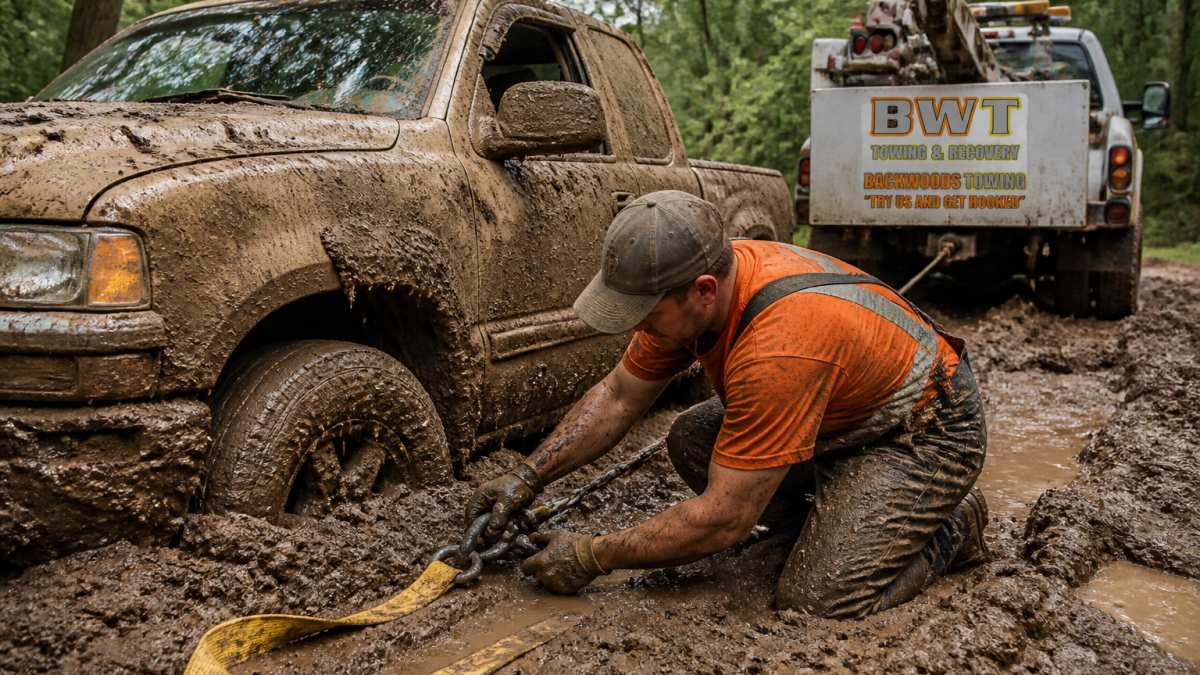
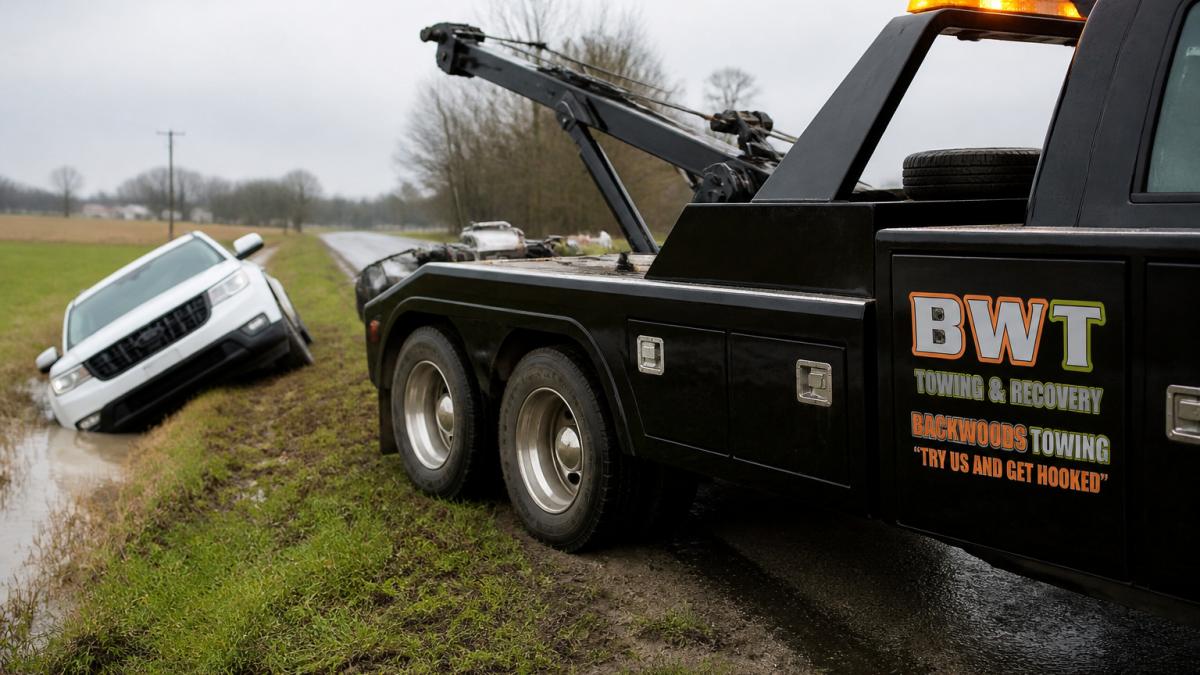
Winch-outs happen when your vehicle is stuck in mud, snow, a ditch, or off the road. A winch pulls your vehicle back to solid ground using a motorized cable. This is different from towing, and it carries its own set of damage risks.
The most common winch-out mistake is pulling from the wrong attachment point. Your vehicle has frame points designed for towing and recovery. Using bumpers, tow hooks, or undercarriage components as anchor points will tear them off. Before any winch-out, the operator should identify the proper frame attachment points specific to your vehicle.
The second mistake is pulling too fast. A winch that pulls at full power creates sudden jerking forces that can snap suspension components, bend frames, or tear engine mounts. Controlled, steady pressure is safer than speed.
Third, never allow a winch cable to wrap around trees or rocks without protection. The cable can snap and whip backward with lethal force. Professional operators use snatch blocks and cable guards to prevent this.
If you need a winch-out in the Buffalo area, make sure the operator inspects your vehicle's frame before attaching anything. Ask them to explain where the cable will attach and why that point is safe. A professional will answer without hesitation.
Proper Tie-Down Techniques and Common Mistakes
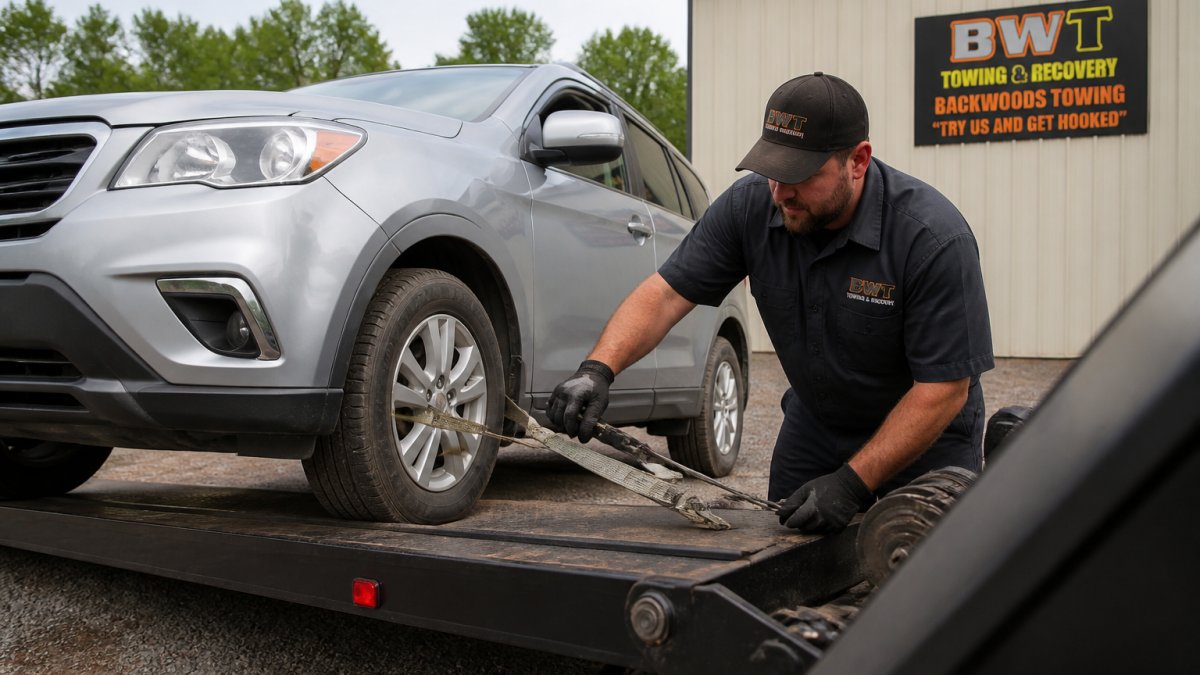
Once your vehicle is on a flatbed, it must be secured with straps or chains. This is where most towing damage actually happens. Improper tie-downs shift your vehicle during transport, stress the frame, and can cause wheels to lock up mid-journey.
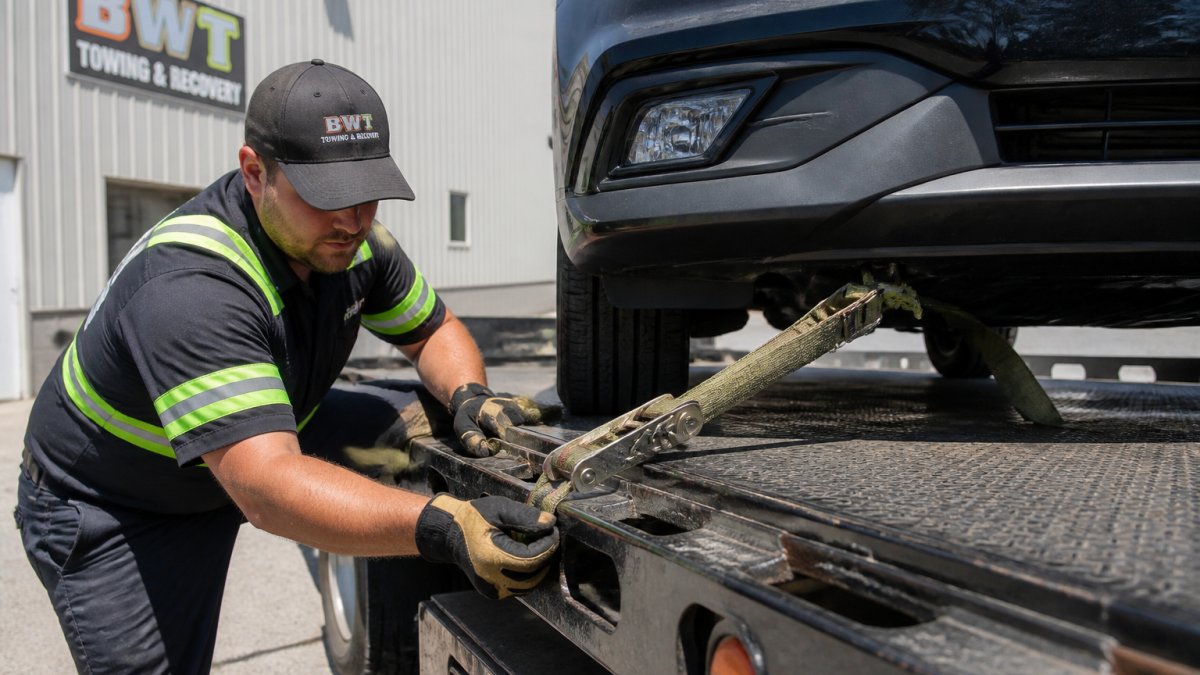
Securing Your Vehicle Correctly
The right way to tie down a vehicle uses four attachment points: two at the front and two at the rear. Each strap should attach to a frame point, never to bumpers, tow hooks, or suspension components.
The straps should form a shallow X pattern across the vehicle. This distributes force evenly and prevents the vehicle from sliding forward, backward, or side to side. Straps should be tight enough that you can't move the vehicle by hand, but not so tight that they deform the frame or body panels.
Here's the proper sequence:
- Position the vehicle centered on the flatbed
- Identify the four frame attachment points (check your owner's manual)
- Attach the front-left strap first, then front-right
- Attach the rear-left strap, then rear-right
- Verify all four straps are equally tight
- Check that the vehicle doesn't shift when you push on it
- Inspect the straps every 50 miles during transport
The angle of the straps matters. Straps that are too vertical put all the force on the frame. Straps that are too horizontal put force on the wheels. The ideal angle is 45 degrees from the vehicle's centerline.
Mistakes That Lead to Damage
The most common tie-down mistakes happen fast:
Using bumpers as attachment points. Bumpers are cosmetic. They're not designed to hold thousands of pounds of force. Strapping to a bumper will tear it off, damage the frame mounting points, and possibly compromise the vehicle's structural integrity.
Over-tightening straps. This seems like it would be safer, but it actually warps the frame. A strap so tight it dents the body panel is too tight. The vehicle should be secure but not deformed.
Using only two straps. Some operators use a single strap across the vehicle or only two straps total. This allows the vehicle to shift side to side or tip during hard braking. Four straps, one at each corner, is the standard for a reason.
Neglecting to secure the steering wheel. If the steering wheel isn't locked, it can turn during transport. This causes the front wheels to angle, creating drag and stress on the suspension.
Leaving the transmission in neutral. When the transmission is in neutral, the wheels can rotate freely. During hard braking, this can cause the vehicle to slide forward on the flatbed. The transmission should be in Park (for automatics) or in gear (for manuals) with the parking brake engaged.
Not checking tie-downs during transport. Straps loosen over time, especially on longer hauls. Professional operators check every 50 miles. If you're riding along, ask the driver to stop and verify the straps are still tight.
What to Do If Your Vehicle Is Damaged During Towing
If you notice damage after towing, act immediately. The longer you wait, the harder it becomes to prove the tow operator caused it.
First, photograph the damage from multiple angles in good lighting. Include the tow truck in the photos if possible. Take close-ups of any dents, scratches, broken components, or fluid leaks.
Second, get the tow operator's name, company, phone number, and driver's license number. Ask for a written estimate of the damage from a local repair shop. Do not accept verbal estimates.
Third, file a damage claim with the towing company within 24 hours. Most towing services carry liability insurance. Provide them with your before photos, the damage photos, and the repair estimate.
If the towing company denies responsibility, contact your insurance company. Your comprehensive or collision coverage may cover towing-related damage. Document everything: dates, times, conversations, and all correspondence.
For serious damage or disputes, consult a local attorney. Many offer free consultations for property damage claims. They can advise whether you have a case and what evidence you'll need.
Preventing vehicle damage during towing starts with preparation and ends with documentation. At Backwoods Towing, we prioritize clear communication and careful handling because we know your vehicle matters.
Frequently Asked Questions
How can I prevent damage to my car when it is being towed?
Prepare your vehicle by documenting its condition, removing loose items, and disabling alarms. Communicate with your tow operator about the best method for your vehicle type. Choose flatbed towing for luxury or low-clearance vehicles, and ensure the operator uses proper tie-down techniques with straps attached to frame points rather than bumpers. For all-wheel-drive vehicles, confirm the operator will use a flatbed or lift all four wheels to prevent transmission damage.
Should I put my car in neutral before it is towed?
Yes, always shift to neutral before towing begins. This reduces strain on the transmission and drivetrain during transport. Leave the steering wheel unlocked so the operator can maneuver the vehicle into position safely. If your vehicle has an electronic shift or is in limp mode, inform the operator immediately so they can adjust their approach.
Can all-wheel-drive vehicles be towed with two wheels on the ground?
No. Towing an all-wheel-drive vehicle with two wheels lifted can cause severe transmission damage because the other two wheels continue to spin while the drivetrain is engaged. All-wheel-drive vehicles should only be towed on a flatbed or with all four wheels lifted off the ground. Always specify your vehicle's drivetrain type when calling for service.
What should I do if my car is damaged during towing?
Document all damage with photos and video before the tow truck leaves. Note the exact time, location, and condition of your vehicle. Get the operator's name, company information, and contact details. File a damage report with the towing company immediately and contact your insurance company if applicable. Keep all documentation and repair estimates for your claim.