 how-to
How Do Professionals Recover a Stuck Vehicle Safely?
Last Updated: October 30, 2026
Quick Summary
Professional vehicle recovery techniques start with assessing the scene, then using a planned winch-out with rated anchor points, slow controlled pulling, and rated equipment. Professionals avoid repeated wheel spinning, which can bury the vehicle deeper, and stop to call for help when the situation is unsafe.
- Assess the scene before attaching any strap or winch line.
- Stop after a few short attempts, since spinning wheels can overheat the transmission.
- Anchor to a heavy-duty recovery vehicle or rated point, never a passenger car hitch.
- Keep everyone outside the danger zone, roughly the winch line length plus a buffer.
- Match every piece of recovery equipment to the expected load and inspect it before use.
Table of Contents
- Why Professional Vehicle Recovery Techniques Differ From DIY Attempts
- Assessing the Scene Before Any Recovery Begins
- How a Vehicle Winch-Out Works Step by Step
- Safe Winching Techniques That Protect People and Vehicles
- Recovery Equipment Professionals Carry and Why It Matters
- Common Recovery Scenarios: Mud, Ditches, Snow, and Sand
- When to Stop Trying and Call Backwoods Towing in Buffalo
- Frequently Asked Questions
Why Professional Vehicle Recovery Techniques Differ From DIY Attempts
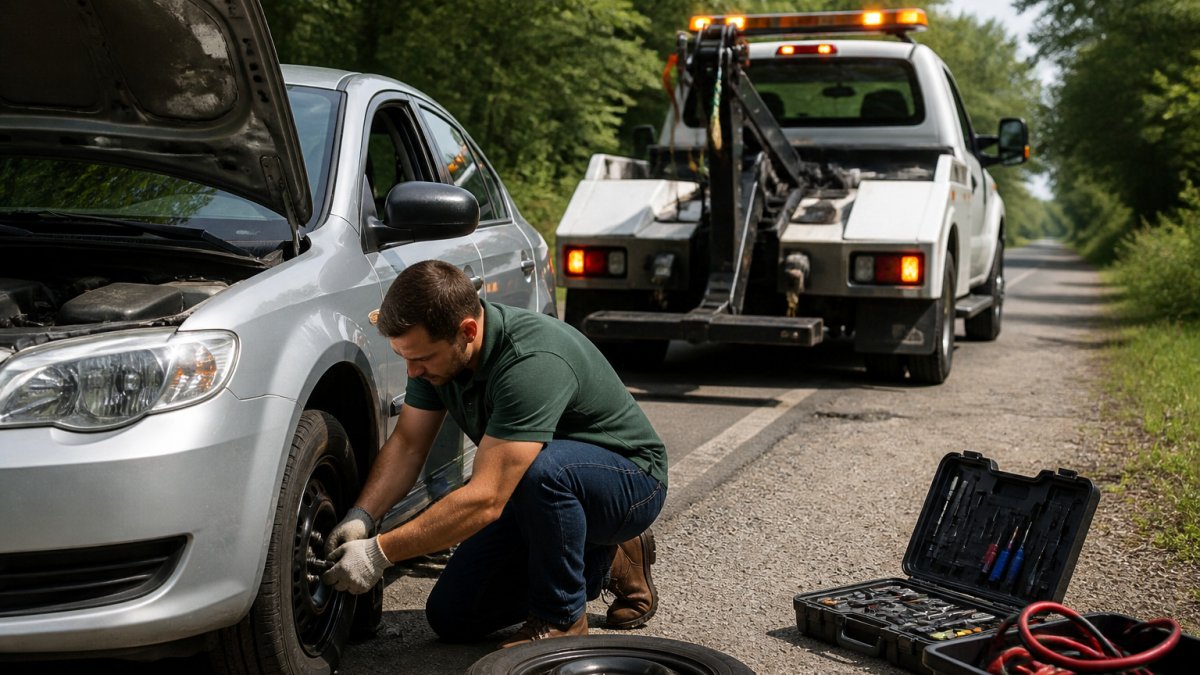
Getting a stuck vehicle out of mud, a ditch, or snow can look simple. In practice, vehicle recovery techniques explained by professionals involve planning, equipment, and safety steps that most drivers never see. The difference between a safe recovery and a dangerous one is usually preparation.
Here is the core problem with DIY attempts. Most people try to drive out of the situation first. That often digs the vehicle in deeper.
Professionals work differently:
- They assess the scene before touching the vehicle.
- They rely on anchor points and controlled pulling, not sudden force.
- They know when to stop and call for help.
Watch out: Repeated spinning wheels can overheat the transmission and bury the vehicle deeper, so stop after a few short attempts.
Assessing the Scene Before Any Recovery Begins
Before anyone attaches a strap, the first job is to read the situation. Ask what the vehicle is stuck in, how deep the wheels are, and whether the ground is shifting. Check for power lines, ditches, and nearby traffic.
Some warning signs mean you should stop and call a professional:
- The vehicle sits on its frame or differential.
- Water is rising or the ground looks unstable.
- The vehicle leans toward a slope or ditch edge.
- Nobody on scene has rated recovery equipment.
If you are unsure whether the vehicle needs a professional winch-out, our guide on signs you need professional winch out explains the warning signs in more detail.
How a Vehicle Winch-Out Works Step by Step
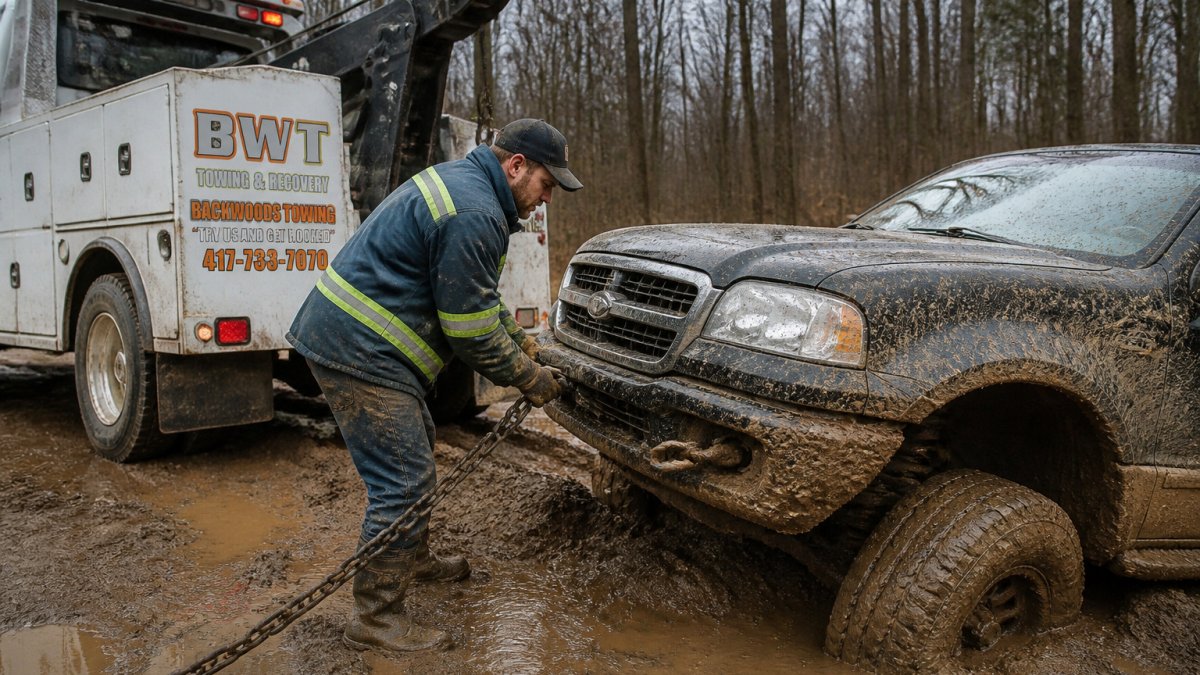
A winch-out uses a truck-mounted winch to pull a stuck vehicle back onto solid ground. The process follows a set order, and skipping steps is where accidents happen.
- Position the recovery truck on stable, level ground.
- Set a secure anchor point for the winch line.
- Attach the winch cable through a rated recovery point.
- Take up the slack slowly before applying load.
- Pull at a steady speed while someone watches the rigging.
- Stop immediately if anything shifts or snaps.
For a full overview of what the service includes, read winch out service: what it is and when you need it.
Anchor Points and Rigging Choices
The anchor point carries the load, so it must be strong enough to hold it. Professionals usually anchor to a heavy-duty recovery vehicle, a solid tree trunk with a wide strap, or a dedicated ground anchor. Never anchor to a tow hitch on a passenger car or a thin tree.
Rigging choices matter as well. A snatch block can double the pulling power and reduce strain on the winch. Keep the line straight and avoid sharp bends in the cable.
Safe Winching Techniques That Protect People and Vehicles
Safety comes first in every recovery. Keep everyone outside the danger zone, which is roughly the length of the winch line plus a buffer. Never stand next to the cable, and never step over it while it is under tension.
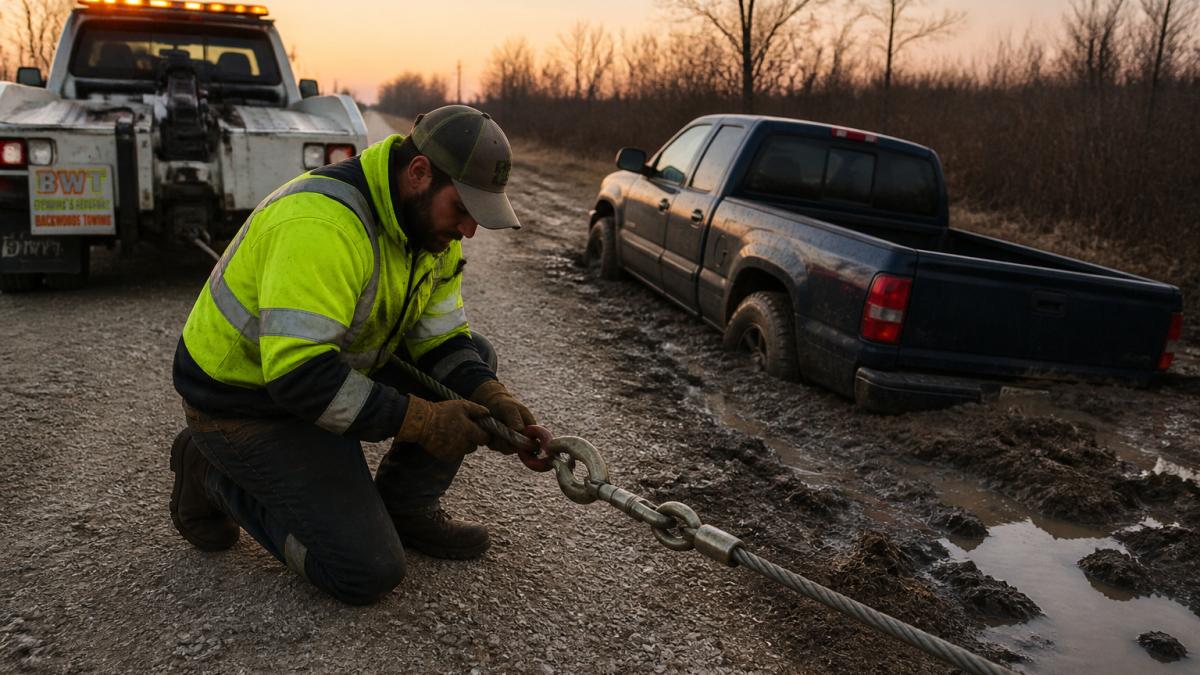
Good technique also protects the vehicle:
- Use wide tree-savers or straps so bark and body panels stay intact.
- Apply the load slowly to avoid jerking the drivetrain.
- Use a damper or heavy blanket over the cable to catch it if it breaks.
- Recover from the direction that pulls the vehicle straight out of the hole.
Recovery crews follow these steps. For more on getting a vehicle out of mud, see car stuck in mud: step-by-step recovery guide.
Recovery Equipment Professionals Carry and Why It Matters
Professional recovery work depends on equipment rated for the load. Each item has a working load limit, and exceeding it is a major cause of injuries.
Good equipment matters because it:
- Keeps the load evenly distributed.
- Reduces the chance of cable or strap failure.
- Protects both the stuck vehicle and the recovery vehicle.
Other providers may use different gear, but the same principle applies: match every component to the expected load and inspect it before each use.
Professional recovery depends on gear rated for the load, and each item has a working load limit that must not be exceeded.
| Equipment | Key requirement | Why it matters |
|---|---|---|
| Winch cable | Rated for the expected load | Prevents cable failure |
| Recovery straps | Match to the load limit | Keeps the load evenly distributed |
| Snatch block | Doubles pulling power | Reduces strain on the winch |
| Damper or blanket | Placed over the cable | Catches the cable if it breaks |
| Anchor point | Heavy-duty, rated recovery point | Holds the load safely |
Common Recovery Scenarios: Mud, Ditches, Snow, and Sand
Each terrain needs a slightly different approach.
- Mud: Clear mud from around the tires, use traction boards if available, and recover in the direction of the original tracks.
- Ditches: Check the slope and bank stability. Pull straight up the bank rather than sideways.
- Snow: Clear snow from the tires and exhaust. Avoid spinning the wheels, which can compact the snow further.
- Sand: Reduce tire pressure if safe to do so, and dig out the front of the tires gently.
Drivers stuck in mud often want to try a few methods before calling for help. Our article on how to get unstuck from mud: 7 proven methods covers the options that are safe to attempt on your own.
When to Stop Trying and Call Backwoods Towing in Buffalo
Some situations are too risky for a DIY attempt. Call for professional help if the vehicle is on a steep slope, near a ditch edge, or close to traffic. Also call if anyone is injured, if you lack rated recovery gear, or if the vehicle does not move after a few careful attempts.
Backwoods Towing & Recovery provides 24/7 roadside assistance and vehicle recovery services for drivers in Buffalo, Missouri, and surrounding communities. Clear communication and status updates are a focus of our service. If you are stuck now, emergency vehicle recovery in Buffalo, MO connects you with round-the-clock help. Call us now for immediate assistance.
Frequently Asked Questions
What are the main professional vehicle recovery techniques?
The most common professional methods are winch-outs, where a truck-mounted or portable winch pulls the vehicle using a steel cable and anchor point; the pull-off, which uses a second vehicle and recovery straps; and lift-and-slide, where the stuck vehicle is partly raised and moved onto solid ground. Operators choose the method based on terrain, vehicle weight, and whether a secure anchor is available. Each technique depends on controlled, steady force rather than sudden jerks, which is why professional crews rarely start with the most aggressive option.
How long does a vehicle winch-out usually take?
Heavier vehicles, deep ruts, or situations requiring multiple anchor points can extend the time considerably. Weather, visibility, and road access also affect the schedule. Backwoods Towing can give a more specific estimate after assessing your situation, and you can call for current availability.
When should I call a professional instead of trying to recover my vehicle myself?
Call a professional if the vehicle is on a slope, near a ditch edge, partly off the road, or resting on its frame, since these conditions raise the risk of rollover or sudden movement. Also call if no safe anchor point is available, if the cable or strap is damaged, or if you are alone in poor visibility. Attempting recovery without proper equipment can damage the drivetrain, bumper, or winch, and can injure bystanders when rigging fails under load.